
No products in the cart.
Vintage Band Tees
Top 90s Vintage Band Tees That Defined an Era
12
Mar
Mar
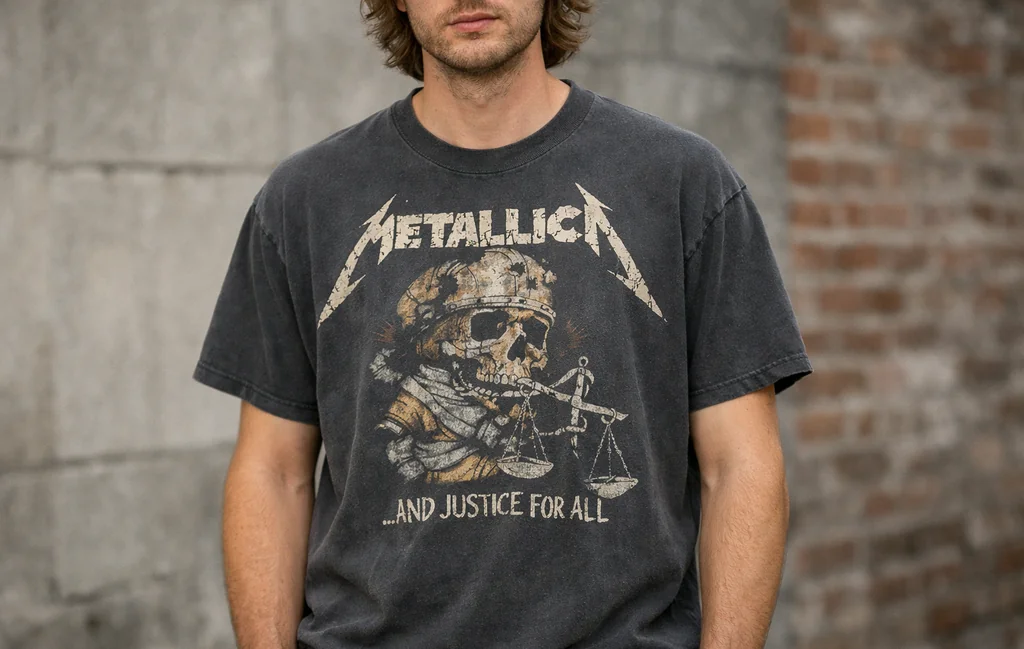
The 1990s reshaped how music intersected with streetwear. Tour shirts moved beyond arena exits and into everyday rotation—skate parks, record shops, underground shows, and city sidewalks. If the 80s introduced graphic band merch to the mainstream, the 90s turned it into cultural capital.
This guide breaks down the most influential designs, why they matter, how to authenticate them, and what makes certain prints command collector-level respect. We’re not just listing shirts—we’re mapping a movement.
Why 90s Band Tees Became Cultural Artifacts
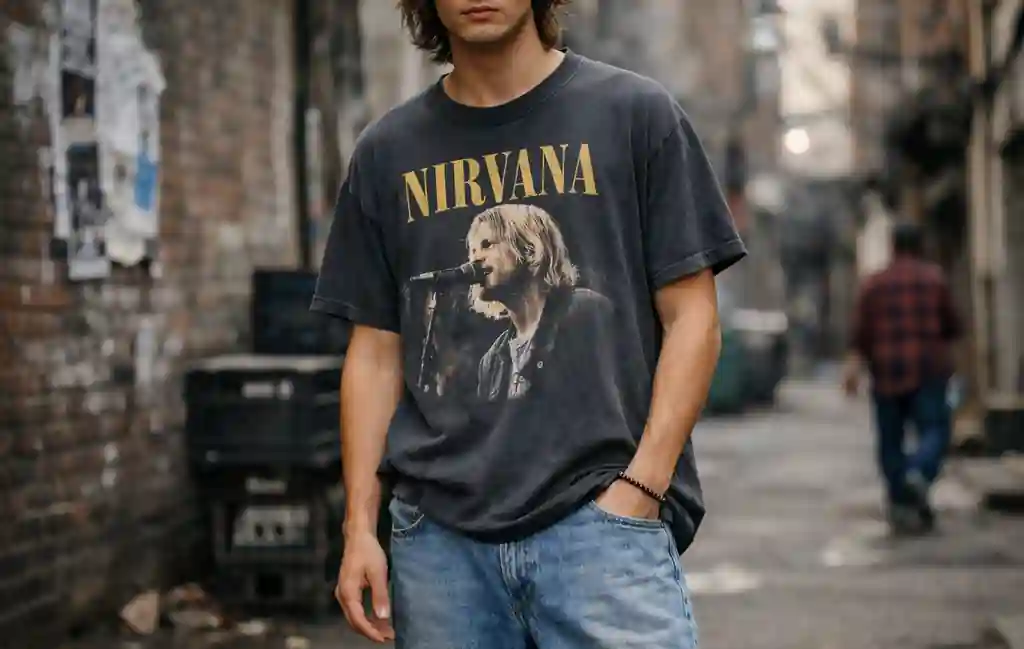
The 90s were different. Music fractured into tribes—grunge, alternative, thrash metal, golden-era hip-hop—and each scene had its own visual language. Band tees became identifiers. You weren’t just wearing a shirt; you were signaling allegiance.
Unlike modern merch drops engineered for resale hype, 90s tour shirts were printed for function. They were worn hard, washed aggressively, faded naturally. That organic aging—single-stitch hems, thinner cotton drape, cracked screen prints—created character over time.
Contrarian perspective: The reason 90s tees feel “cooler” isn’t nostalgia alone. It’s the imperfect production methods and analog printing techniques that made each run slightly different. Today’s uniform mass production rarely produces that variance.
Collectors often ask: Why are 90s band shirts so expensive now? Scarcity, cultural weight, and condition intersect. A limited tour run from 1994 represents a moment that can’t be recreated.
What Makes a 90s Band Tee Truly Vintage
Before diving into the icons, we need clarity: what separates an authentic 90s piece from a modern reprint?
True vintage pieces typically feature:
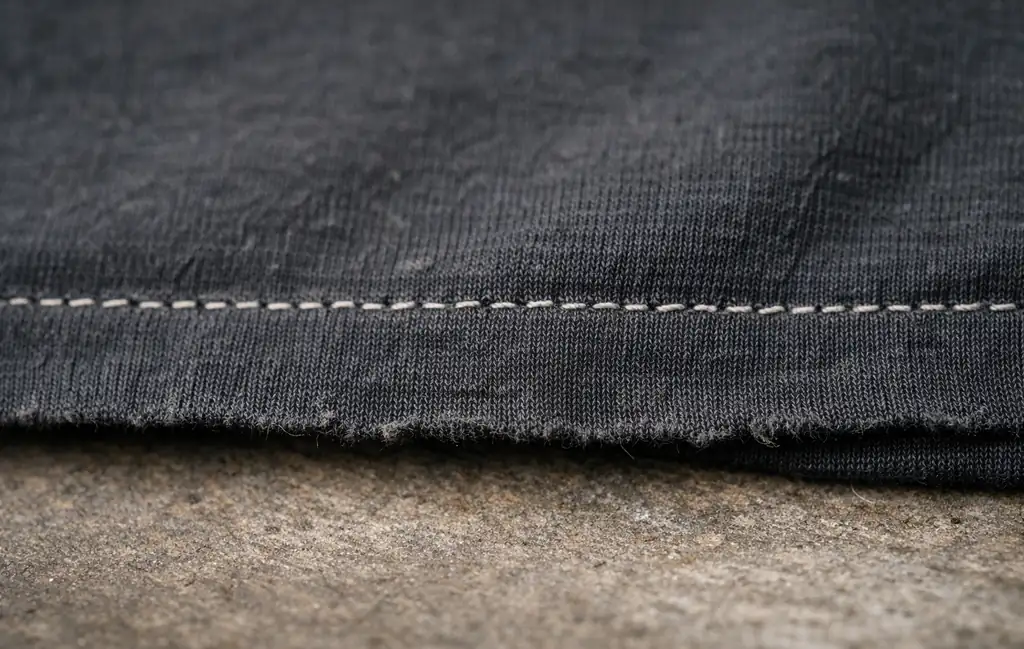
- Single-stitch hems (common through mid-90s production)
- Heavier cotton that softens dramatically over time
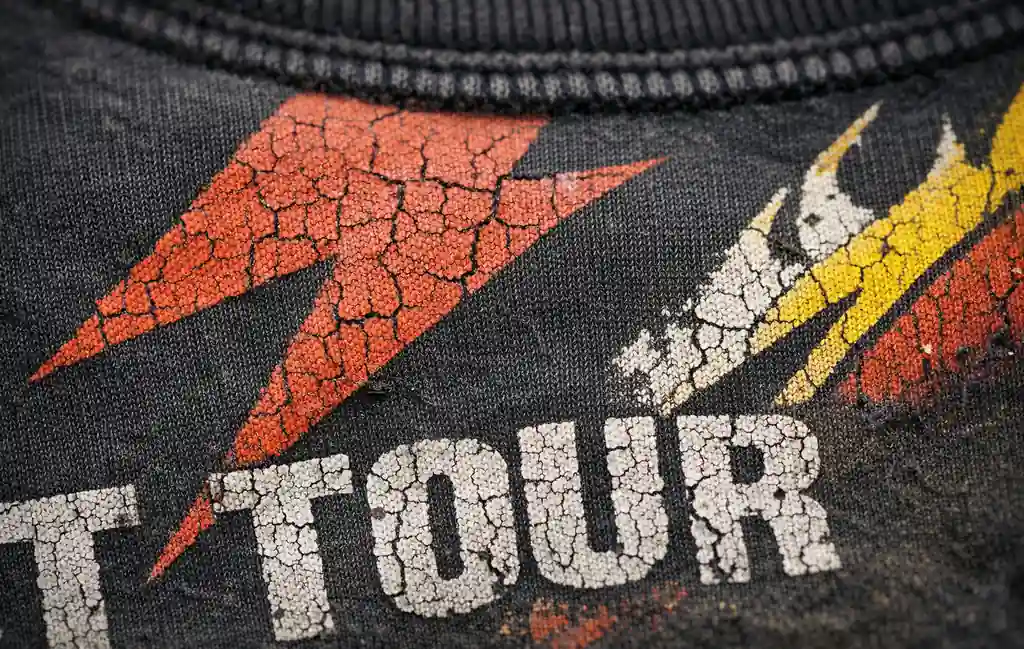
- Natural ink cracking from aged screen printing
- Era-specific tags and licensing marks
- Tour date back prints tied to real events
One of the most searched questions in this space is: How can you tell if a band tee is really from the 90s? The answer lies in construction and wear, not just graphic design. If you want a deeper breakdown of authentication markers, see our full guide on what makes a band tee vintage.
Buyer psychology matters here. Many people chase “distressed” prints—but artificial distress rarely mimics decades of fiber breakdown. Authentic cracking follows the stress lines of the cotton weave. It doesn’t look painted on.
Grunge Icons of the 90s
No conversation about 90s vintage band tees is complete without grunge.
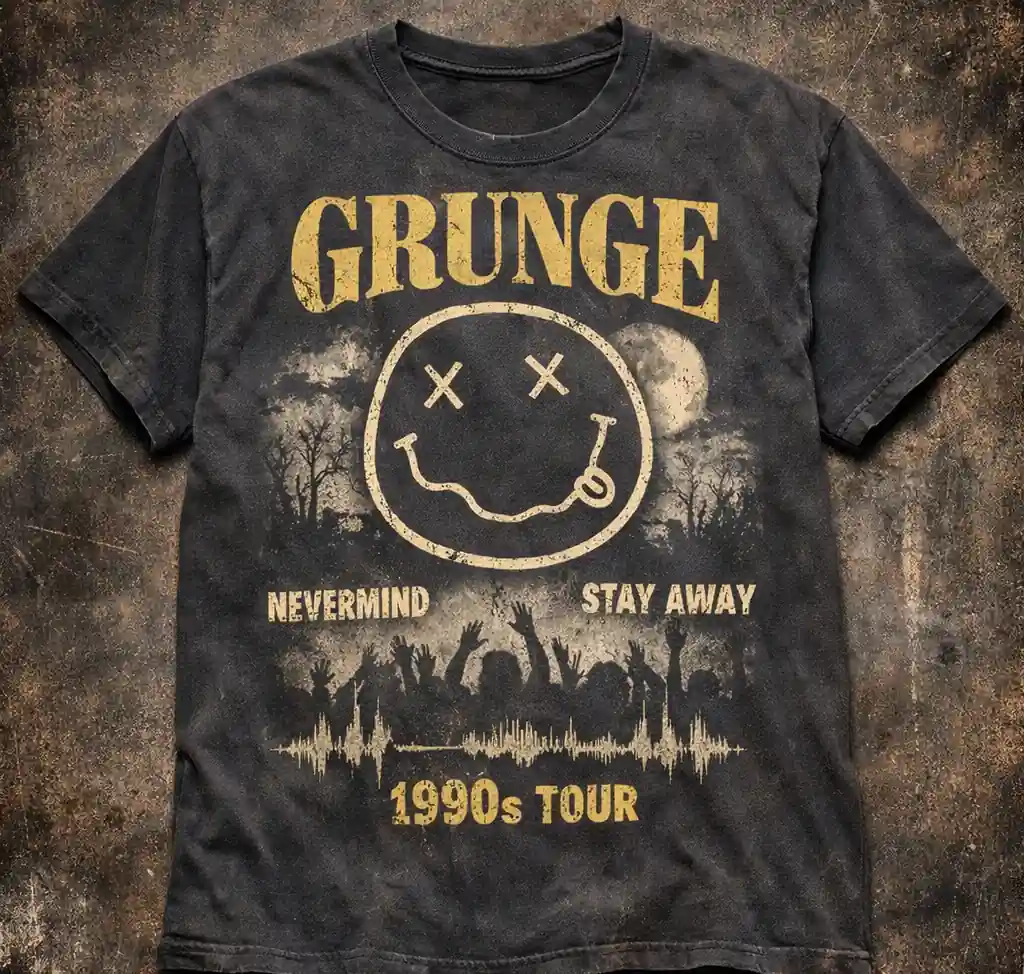
When Nirvana exploded into mainstream consciousness, the band’s imagery became instantly recognizable. The iconic smiley graphic became one of the most reproduced shirt designs in history. But original early-90s prints—especially tour versions—remain collector grails.
Alongside Nirvana, bands like Pearl Jam, Soundgarden, and Alice in Chains defined an aesthetic rooted in authenticity over polish. Their shirts often featured darker ink palettes, oversized fits, and moody artwork that reflected the Pacific Northwest sound.
Cultural analysis: Grunge tees were rarely flashy. Their appeal was anti-fashion. Ironically, that anti-fashion stance is what made them fashion staples decades later.
Common PAA-style question: Are Nirvana shirts from the 90s worth money? Yes—especially early licensed prints in good condition. Value spikes when you combine correct tags, intact graphics, and authentic fading.
Thrash & Metal Tour Classics
If grunge defined introspection, metal defined intensity.
Metallica’s 90s era—especially the Black Album cycle—produced some of the most recognizable tour tees ever printed. Large back graphics with global tour dates became standard. Meanwhile, Pantera and Slayer pushed aggressive, high-contrast artwork that translated powerfully onto heavyweight cotton.
Metal tour shirts often used oversized graphics and bold ink saturation. Over time, that heavy ink application cracked dramatically, producing the textured look collectors now chase.
Production insight: The heavier the ink laydown, the more dramatic the aging effect decades later. That’s why 90s metal tees often show pronounced crack patterns compared to minimalist designs.
Collectors frequently ask: What is an all-over print band tee? In the 90s, certain metal and alternative acts experimented with full-front graphics that extended beyond the chest frame. These prints required more complex screen setups and are now highly sought after.
90s Hip-Hop Statement Tees
Golden-era hip-hop transformed the band tee into a street uniform.
Wu-Tang Clan’s bold “W” logo became one of the most culturally embedded graphics of the decade. Tupac Shakur memorial tees surged after his passing, many produced in limited community-driven runs. Nas and The Notorious B.I.G. also inspired graphic tributes that blended music with urban art.
Hip-hop tees in the 90s were less about tour schedules and more about iconography. Portrait graphics, strong typography, and monochrome photography dominated the aesthetic.
Decision clarity logic: If you’re evaluating a 90s hip-hop shirt, look for licensing details and era-consistent printing methods. Bootlegs exist—and some are collectible—but authenticity dramatically impacts value.
Common PAA question: Are 90s rap tees rare? Certain originals absolutely are, especially short-run memorial prints or early licensed drops tied to landmark albums.
Alternative Rock & Punk Revival Graphics
The 90s also revitalized punk energy. Green Day’s breakout era introduced playful, chaotic visuals. The Smashing Pumpkins leaned into surreal artwork and album-themed imagery. Rage Against the Machine merged political messaging with striking graphic layouts.
Unlike minimalist grunge pieces, these designs often featured brighter palettes and intricate illustrations. That complexity made aging patterns more visually dramatic over time.
Comparative breakdown:
- Grunge: muted, understated, anti-fashion
- Metal: bold, oversized, high ink density
- Hip-Hop: iconic logos and portrait graphics
- Alternative/Punk: experimental and illustrative
Each subculture contributed a distinct chapter to the evolution of 90s vintage band tees—and each appeals to a slightly different collector mindset.
As the demand for these styles continues, modern interpretations aim to capture that same cultural gravity without sacrificing durability. We’ll explore how to evaluate and style them in the next section.
Rare & Collectible 90s Prints That Command Attention
Not all 90s shirts are created equal. While many designs are nostalgic, only a fraction reach true collector status. Rarity is driven by three forces: limited production runs, cultural timing, and survival rate.
What makes a 90s band tee rare? Typically, it’s one of the following:
- Short tour runs tied to specific cities or international legs
- Album-release prints produced for a single season
- Memorial or tribute editions created in limited quantities
- All-over prints requiring complex screen setups
- Early-issue graphics before a band’s mainstream breakthrough
For example, early tour shirts connected to Metallica in the early 90s or memorial-era prints honoring Tupac Shakur surged in value because they represent a specific cultural flashpoint. Scarcity compounds when condition remains strong—minimal holes, intact seams, and legible graphics.
Buyer psychology insight: Collectors don’t just buy the shirt. They buy proximity to a moment in music history. The more emotionally charged the moment, the higher the demand.
Another frequent question: Are bootleg 90s band tees worth anything? Surprisingly, yes—if they are authentic 90s bootlegs. Certain underground prints have become desirable precisely because they reflect street-level culture rather than official merchandising channels.
How to Authenticate a 90s Vintage Band Tee
Authentication separates nostalgia from investment-grade collecting.
When evaluating a piece, examine:
- Hem construction: Single-stitch sleeves and bottom hems were common in early-to-mid 90s production.
- Tag era: Research the brand label style used during that time period.
- Graphic aging: Natural cracking follows fabric stress points.
- Fabric weight and drape: Older cotton softens and thins over decades.
- Licensing details: Official copyright lines often appear near the graphic.
Contrarian perspective: A perfectly crisp graphic on a supposed 1993 shirt should raise suspicion. Real vintage pieces show life—micro-fading, slight misregistration in prints, subtle irregularities.
Collectors often ask: Can you still wear authentic 90s tees without damaging them? Yes, but careful washing (cold water, air dry) helps preserve print integrity. Excess heat accelerates cracking and fiber breakdown.
For those who love the look but prefer durability, modern reproductions can deliver similar aesthetics with updated printing techniques that reduce premature wear while maintaining a soft-hand feel.
Why 90s Tees Still Dominate Streetwear
Fashion is cyclical—but the 90s never fully left.
The oversized silhouette, relaxed cotton drape, and bold graphics of 90s band shirts align perfectly with modern streetwear preferences. Layered under flannel, paired with relaxed denim, or styled beneath tailored outerwear, the look adapts without losing identity.
Cultural analysis: The 90s represented authenticity over polish. In an era saturated with algorithm-driven trends, that authenticity feels grounded and real.
Common PAA-style question: How do you style a 90s band tee today?
- Layer under an open overshirt or flannel
- Pair with straight-leg or relaxed denim
- Add minimal sneakers or boots
- Keep accessories understated
Another frequent question: Are 90s band tees unisex? Yes. Most original prints used boxy, unisex cuts that work across body types—one reason they remain adaptable today.
Modern 90s-Inspired Tees vs. Originals: What’s the Smart Buy?
Originals carry cultural weight and scarcity. Modern pieces offer durability, consistent sizing, and cleaner condition.
If you’re collecting for archival value, originals matter. If you’re building a wearable rotation, modern interpretations can provide:
- Heavyweight cotton construction
- Reliable sizing consistency
- High-definition print clarity
- Durable color retention
At Capital T Shirt, our classic unisex tees are built on 5.3 oz heavyweight cotton using DIGISOFT® printing for a soft-hand feel and reduced cracking compared to traditional plastisol. That means you get the visual presence of 90s aesthetics without sacrificing longevity.
For a full range of music-driven styles, explore the broader Music T-Shirts collection, where modern production meets era-inspired design.
Frequently Asked Questions About 90s Band Tees
Are all 90s band tees valuable?
No. Value depends on band popularity, print rarity, condition, and cultural significance. A common mass-produced design may carry nostalgia but not collector pricing. Scarcity and historical relevance drive premium value.
What size were 90s shirts typically?
Most featured boxy, relaxed unisex fits. Compared to modern slim cuts, they often feel wider and slightly shorter in length. Always compare measurements rather than relying solely on tag size.
Do 90s prints crack easily?
Over time, yes. Traditional screen printing used thicker ink layers that naturally crack with wear and washing. This aging effect is part of the appeal but also signals authenticity.
How should I wash a vintage band tee?
Wash inside out in cold water and avoid high heat drying. Air drying preserves both cotton integrity and print structure. Heat is the fastest way to accelerate graphic breakdown.
Why are certain rap tees so expensive?
Limited production, cultural impact, and strong collector communities push prices upward—especially for memorial prints or early licensed releases tied to landmark albums.
Where to Find Quality Vintage-Inspired Music Tees Today
While authentic originals remain prized collector pieces, well-produced modern alternatives deliver everyday wearability without compromising visual depth.
If you’re drawn to the aesthetic of 90s vintage band tees but want dependable construction, explore our curated selection of vintage-inspired band shirts. Each design channels the spirit of 90s music culture while leveraging contemporary production standards for comfort and durability.
From rock to alternative to hip-hop influence, the goal isn’t to imitate history—it’s to honor it through wearable design.
The 90s didn’t just shape music. They shaped identity. And the right tee still carries that signal today.

Related Posts: