
No products in the cart.
Music T Shirts, Rock Band Shirts
90s Rock Band Tees Style Breakdown: What Made These Shirts Iconic

27
Mar
Mar
Few pieces of music merchandise have influenced fashion as deeply as the legendary 90s rock band tees. These shirts weren’t just concert souvenirs—they became symbols of alternative culture, youth rebellion, and the raw authenticity of the decade’s music scene. From grunge clubs in Seattle to skate parks and college campuses, band tees defined the visual identity of 1990s rock culture.
Today, the aesthetic is stronger than ever. Vintage-inspired rock shirts dominate streetwear collections, resale markets, and modern music fashion. Understanding what made these designs special requires more than nostalgia—it involves exploring the music movements, graphic design trends, and cultural shifts that shaped the era.
This guide breaks down the visual DNA, cultural influence, and styling logic behind the shirts that defined the decade.
Featured snippet answer: 90s rock band tees became iconic because they combined oversized fits, distressed graphics, album artwork, and tour prints that reflected the raw spirit of alternative rock. Influenced by grunge and skate culture, these shirts evolved from concert merchandise into fashion staples that still influence modern streetwear today.
Why 90s Rock Band Tees Became Iconic
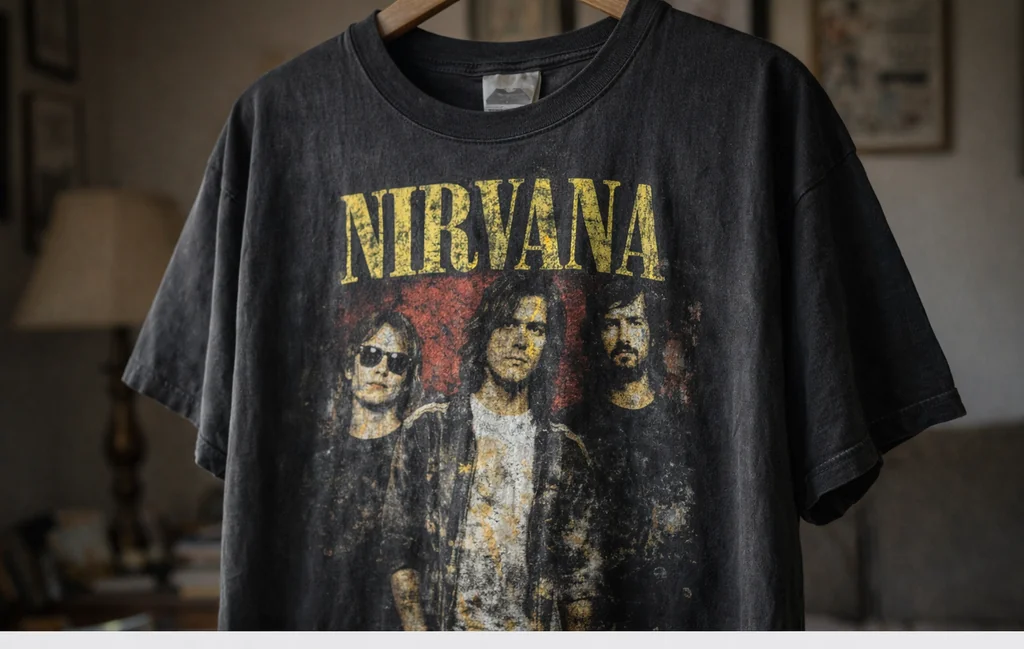
The popularity of rock band shirts in the 1990s wasn’t accidental. It was driven by a cultural moment when music, fashion, and youth identity merged into a single aesthetic.
The rise of bands like Nirvana, Pearl Jam, Soundgarden, and Red Hot Chili Peppers created an environment where music fans wanted to express their identity through clothing. Concert shirts became wearable symbols of belonging within the alternative rock movement.
Several cultural forces helped elevate these shirts beyond simple merchandise:
- The grunge movement made casual clothing socially acceptable and even fashionable.
- Tour culture exploded as bands traveled globally, producing new shirt designs for each tour.
- DIY aesthetics encouraged imperfect graphics and worn textures.
- Music television amplified visual identity as fans saw artists wearing their own merch.
- Skate and street culture embraced oversized tees and graphic prints.
Unlike the flashy designs of the previous decade, the 90s leaned toward darker tones, distressed artwork, and emotionally expressive imagery.
The result was clothing that felt authentic rather than promotional. A worn band shirt signaled music taste, attitude, and subculture alignment all at once.
Modern fashion brands still draw inspiration from this era when producing new designs within the broader music apparel category, because the cultural appeal of rock graphics never really faded.
The Visual DNA of 90s Band Shirts
While every band had unique artwork, most shirts from the era shared recognizable design patterns. These elements created the unmistakable look associated with the decade.
Oversized Graphics
Large front prints were one of the most defining traits. Instead of small logos, designers filled the entire chest area with bold imagery. Album artwork, surreal illustrations, and gritty textures dominated the visual field.
This scale made shirts feel expressive and rebellious compared to minimalist fashion trends.
Tour Date Back Prints
Another hallmark was the tour-date design printed on the back of shirts. Fans could literally wear the history of a band’s live performances.
These lists of cities and venues turned shirts into time capsules—capturing a moment in music history.
Album Artwork Influence
Many graphics were directly inspired by album covers. This strengthened the connection between music and fashion. Wearing a band shirt became an extension of the listening experience.
Distressed Vintage Aesthetic
Unlike the glossy prints seen in earlier rock merchandise, the 1990s embraced rough textures. Ink cracking, faded colors, and slightly imperfect prints created an authentic worn-in appearance.
Modern production techniques such as high-definition DIGISOFT® printing recreate this visual depth while maintaining a soft-hand feel and strong color durability.
The Bands That Defined 90s Band Tee Culture
Not all bands had the same visual impact on shirt culture. Certain artists became synonymous with the decade’s most recognizable designs.
Nirvana
The smiley-face logo is arguably one of the most recognizable rock graphics ever printed. The band’s aesthetic—raw, rebellious, and slightly chaotic—perfectly captured the spirit of the grunge movement.
Pearl Jam
Pearl Jam shirts often leaned into darker artistic themes, featuring surreal artwork and tour-based designs that became collectibles among fans.
Soundgarden
Known for psychedelic visuals and darker symbolism, Soundgarden shirts pushed the boundaries of what rock merch graphics could look like.
Red Hot Chili Peppers
The band’s iconic asterisk logo appeared across countless shirt variations. The simplicity of the design made it instantly recognizable.
Green Day
As pop punk gained popularity in the late 1990s, Green Day brought a more playful but still rebellious energy to band shirt design.
These artists helped cement the idea that band shirts were not just souvenirs—they were fashion statements.
Today’s rock band shirt collections often reinterpret these visual motifs for modern audiences.
80s vs 90s Rock Band Shirts: A Design Evolution
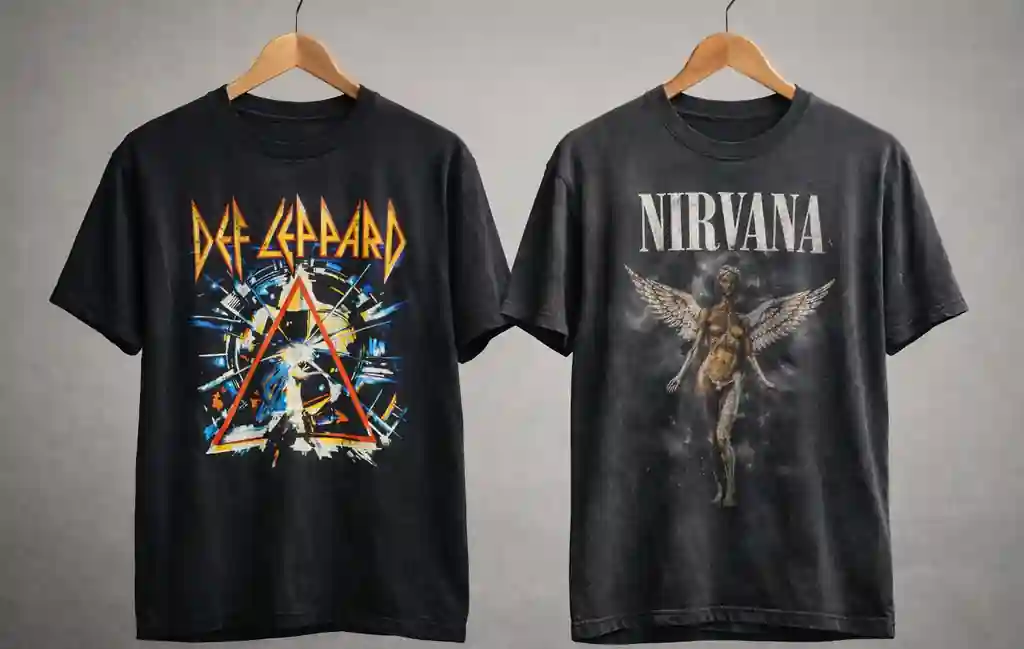
To truly understand the impact of the 1990s aesthetic, it helps to compare it with the decade that came before.
The 1980s were dominated by glam metal and stadium rock. Shirt graphics reflected that environment with bright colors, dramatic fonts, and fantasy-style illustrations.
By contrast, the 1990s moved in the opposite direction.
The design differences can be summarized clearly:
- Color palette: 80s designs used neon tones while 90s shirts leaned toward black, grey, and muted colors.
- Graphic style: Earlier shirts were theatrical; 90s graphics were raw and expressive.
- Typography: Heavy-metal fonts gave way to simpler or distressed lettering.
- Cultural message: Glam rock celebrated spectacle, while grunge embraced authenticity.
This transformation mirrored broader shifts in music culture. Audiences began valuing emotional honesty and authenticity over flashy performance aesthetics.
The transition also explains why vintage band tees from the 1990s feel closer to modern streetwear than many earlier designs.
Readers interested in the earlier decade can explore the evolution further in the 80s rock band shirts guide.
Understanding this stylistic shift is key to recognizing why the 90s era continues to dominate the vintage band tee market.
How to Style 90s Rock Band Tees Today
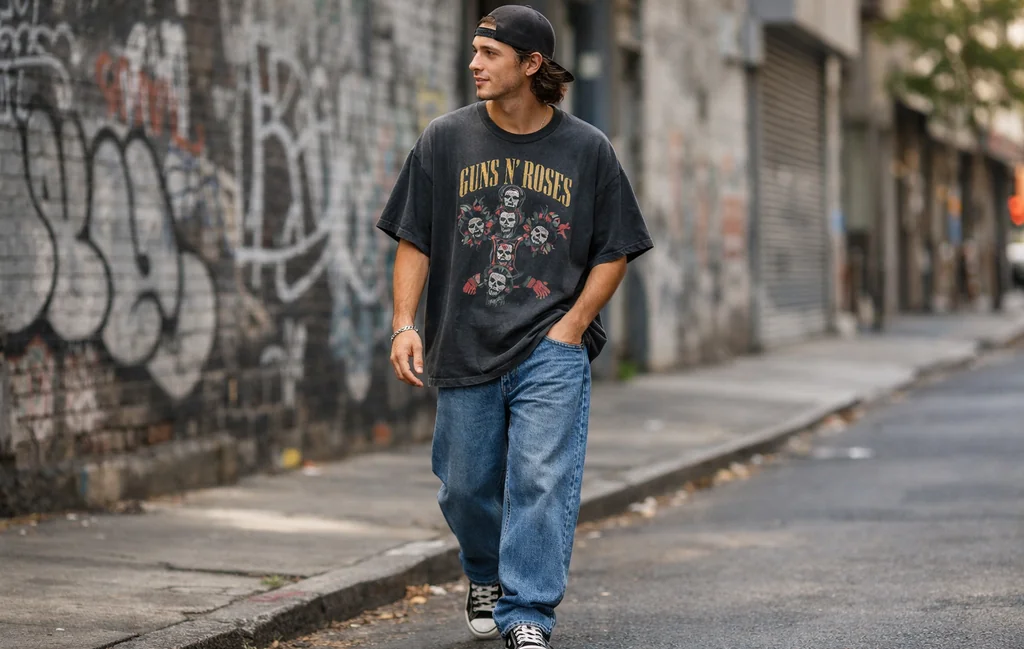
One reason vintage rock shirts never disappear from fashion is their versatility. While the original fans wore them as concert memorabilia, modern styling turns them into central pieces of everyday outfits.
The key difference between wearing a band tee and styling one is intentionality. When combined with the right clothing pieces, a graphic shirt can create an effortless look that feels authentic rather than costume-like.
Here are several styling approaches that capture the essence of the 1990s while still working in contemporary fashion.
1. The Grunge-Inspired Casual Look
The most direct homage to the decade is the classic grunge outfit. This style draws from the relaxed clothing choices popularized by alternative rock musicians during the early 1990s.
A simple outfit formula works well:
- Oversized band tee
- Loose denim or worn jeans
- Flannel shirt layered over the tee
- Classic sneakers or boots
The goal is not perfection but authenticity. Slightly faded fabrics and relaxed fits make the outfit feel natural rather than overly styled.
2. Modern Streetwear Layering
Another popular approach blends vintage rock graphics with contemporary streetwear silhouettes.
This combination works especially well with:
- Wide-leg or baggy denim
- Chunky sneakers
- Oversized hoodies layered under the shirt
- Minimal accessories
Streetwear brands frequently reinterpret vintage band aesthetics because they align perfectly with oversized silhouettes and graphic-heavy design.
For readers looking to experiment with outfit combinations, the guide on how to style rock band tees offers additional inspiration.
3. Minimalist Everyday Outfit
Not every look needs to lean heavily into retro culture. A band tee can also work in clean, modern outfits.
Pairing a vintage-style shirt with simple pieces creates balance:
- Straight-fit jeans
- Neutral sneakers
- A lightweight jacket
In this context, the shirt acts as the visual focal point of the outfit. The rest of the clothing supports the graphic rather than competing with it.
This balance is why vintage-inspired rock shirts remain relevant across different fashion aesthetics.
Why Vintage Band Tees Became Collectible
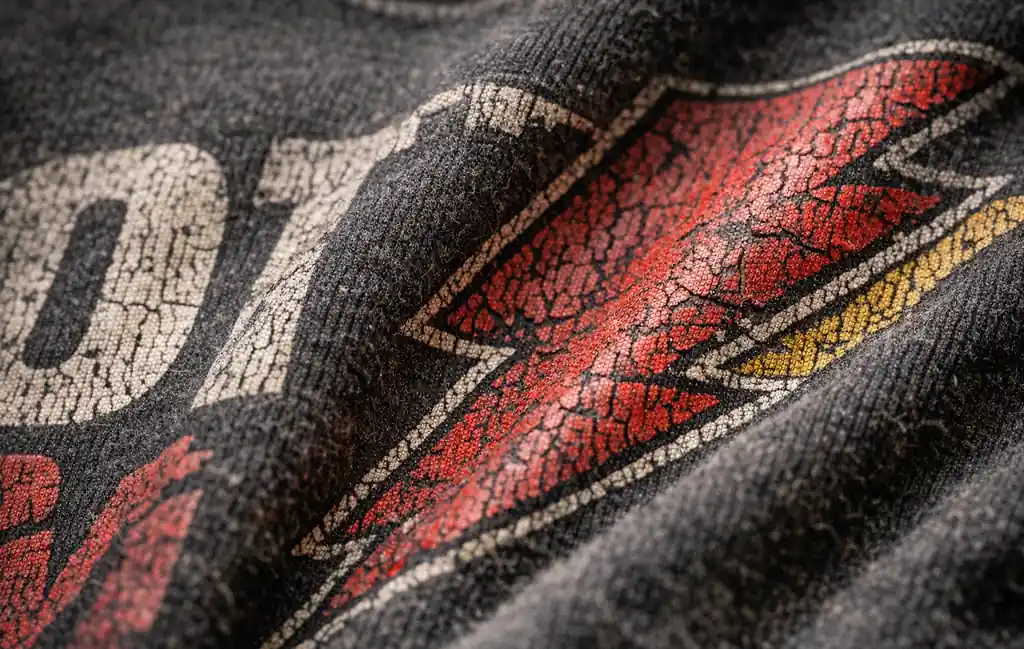
Beyond fashion trends, vintage band shirts have developed a strong collector culture. Certain original concert shirts from the 1990s can sell for hundreds or even thousands of dollars in resale markets.
Several factors contribute to their collectible value.
Limited Production Runs
Many tour shirts were printed in small batches for specific concerts or tour stops. Once the event ended, those exact designs were rarely reproduced.
This scarcity naturally increased their value over time.
Music History Significance
Some shirts are connected to landmark tours or iconic album releases. Fans often view these garments as artifacts of music history rather than just clothing.
Aging Materials
Over time, cotton fabric softens and prints develop subtle fading patterns. These characteristics give vintage shirts their distinctive texture and visual depth.
Modern apparel production can replicate the look while maintaining durability. High-definition print methods such as DIGISOFT® create graphics with a soft-hand feel and long-lasting color retention, reducing the cracking often associated with older printing techniques.
How Modern Brands Recreate the 90s Band Tee Look
Reproducing the style of 1990s rock shirts requires more than simply printing a band logo. Designers must balance nostalgia with modern garment construction.
Several design strategies help achieve this balance.
Authentic Graphic Inspiration
Designers frequently study vintage concert merchandise to understand the visual language of the era. Elements such as distressed typography, layered illustrations, and oversized prints remain central to recreating the style.
Quality Cotton Fabric
Classic rock shirts are typically produced using heavyweight cotton garments that maintain structure while still feeling comfortable.
High-quality unisex tees made from 5.3 oz cotton offer durability while maintaining a soft texture. Taped neck and shoulder construction helps the shirts hold their shape through repeated wear.
Modern Printing Technology
Vintage designs originally used various screen-printing techniques. Modern print systems allow brands to recreate those visuals while improving comfort and durability.
DIGISOFT® printing produces high-definition graphics that remain soft against the fabric while maintaining long-term color integrity.
These production improvements mean modern band tees can capture vintage aesthetics without sacrificing comfort or longevity.
Common Questions About 90s Rock Band Tees
Why are 90s band tees so popular today?
The resurgence of vintage fashion has brought renewed attention to rock merchandise from the 1990s. These shirts represent a cultural era defined by alternative music, relaxed fashion, and graphic-heavy design. Their authenticity and connection to music history make them appealing to both collectors and modern fashion enthusiasts.
How can you tell if a band shirt is vintage?
Authentic vintage shirts typically show signs of natural aging. This can include softened cotton fabric, slightly faded prints, and older garment tags. However, modern reproductions can intentionally mimic this appearance, which is why visual style alone does not always guarantee originality.
Are vintage band shirts worth collecting?
Many collectors see vintage band shirts as wearable pieces of music history. Limited production runs and iconic tour designs often increase their value over time. While not every shirt becomes highly valuable, certain designs from influential bands can become sought-after collectibles.
Why do vintage band tees feel softer?
Cotton fibers naturally soften with repeated washing and wear. Over decades, the fabric becomes more flexible and comfortable. Modern cotton garments can achieve similar comfort levels using high-quality cotton and careful production methods.
Can modern band tees still capture the vintage look?
Yes. Many contemporary designs intentionally recreate the graphic style of older shirts. By combining vintage-inspired artwork with modern cotton garments and high-definition printing, brands can produce shirts that look classic while remaining durable and comfortable.
Where to Find Quality Rock Band Shirts Today
Whether you’re drawn to vintage aesthetics, music culture, or graphic streetwear, rock band shirts remain one of the most expressive pieces of casual fashion.
The key is finding shirts that balance authentic design with reliable garment quality. Modern cotton tees with high-definition graphics offer the same visual impact as classic tour shirts while maintaining everyday durability.
For readers exploring styles inspired by the golden era of alternative rock, browsing the full music t-shirts collection is the easiest way to discover designs influenced by decades of rock culture.
From vintage-inspired graphics to modern interpretations of legendary band imagery, these shirts continue to prove that the visual legacy of 1990s rock is far from over.

Related Posts: