No products in the cart.
Save 20% on orders over $100 with code CT20

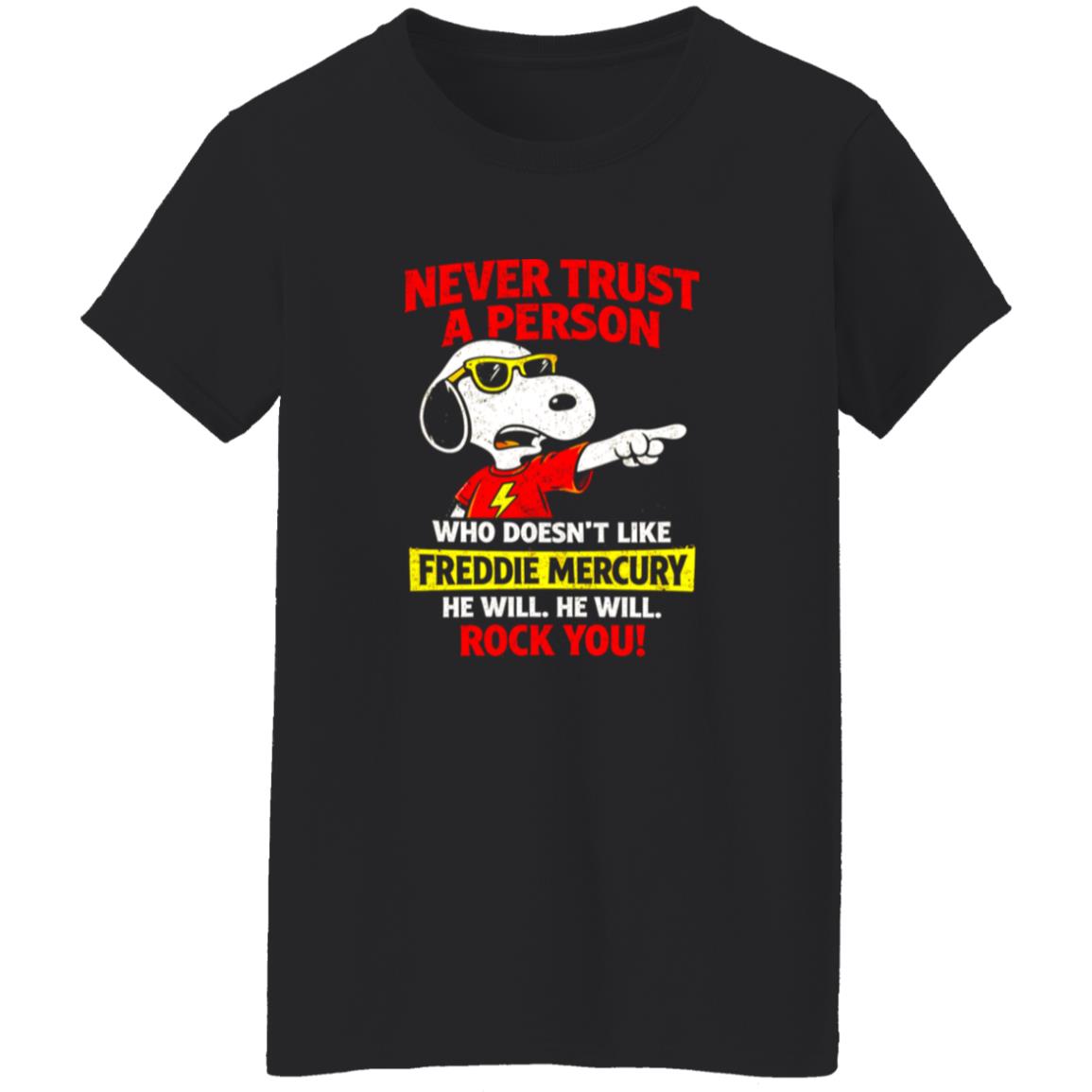
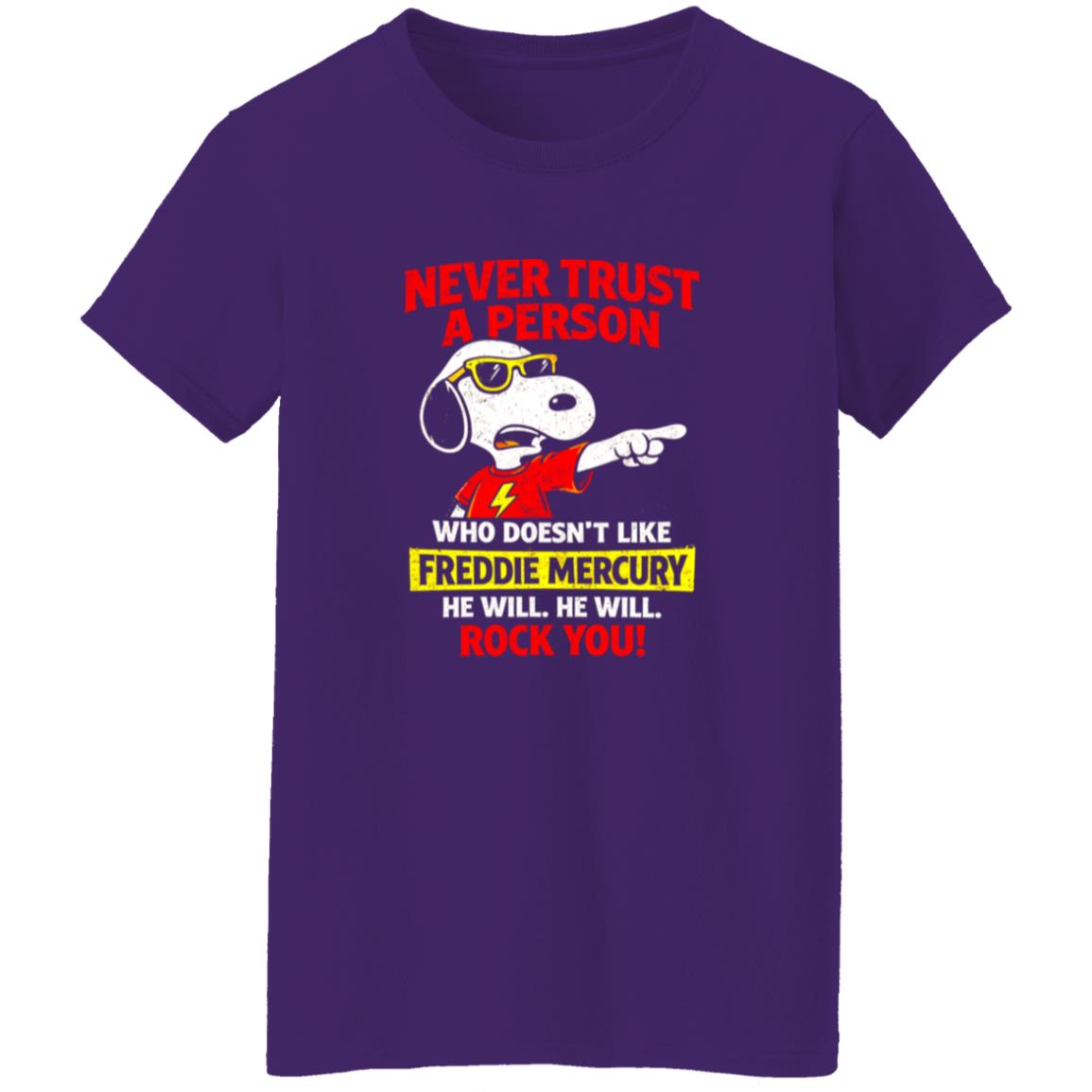
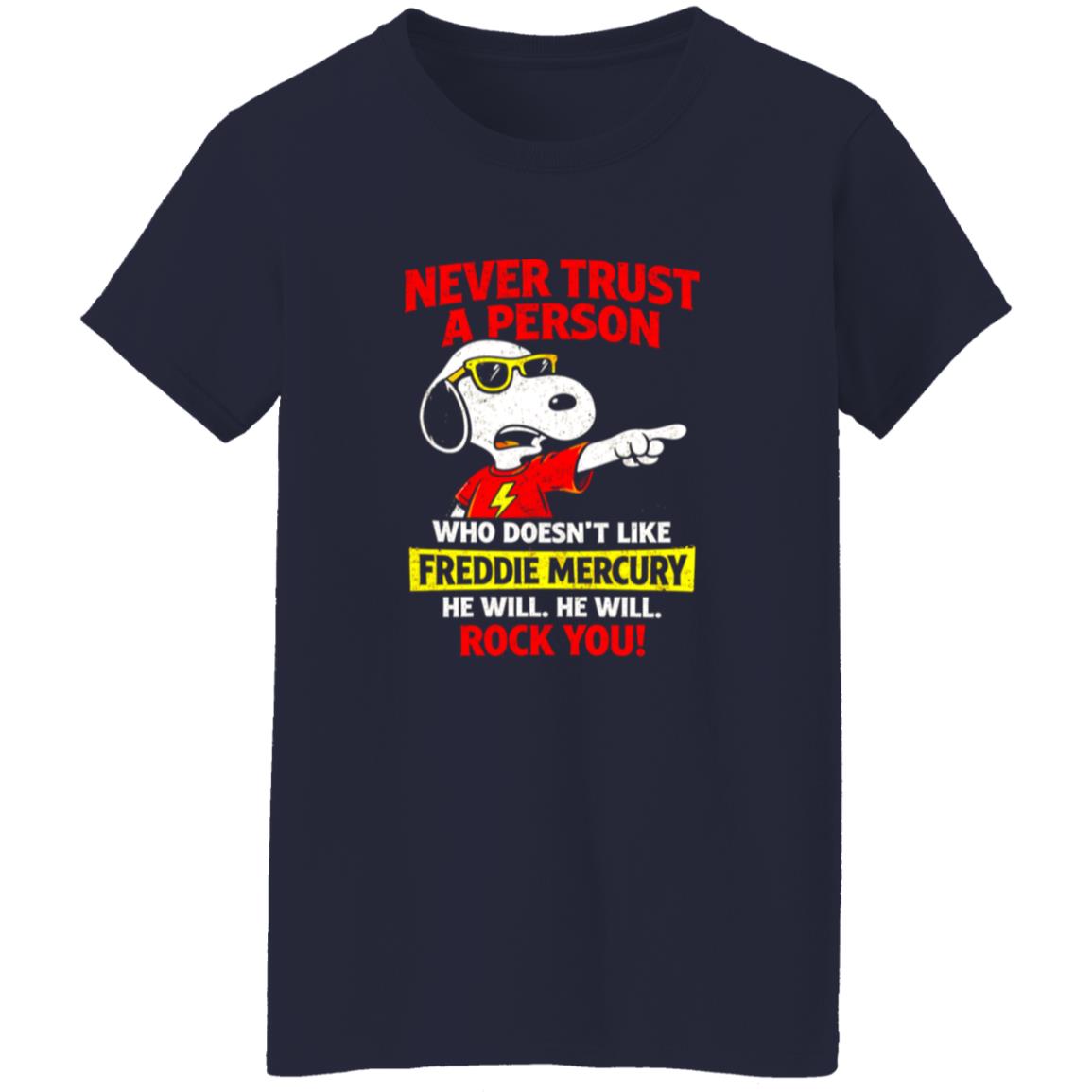
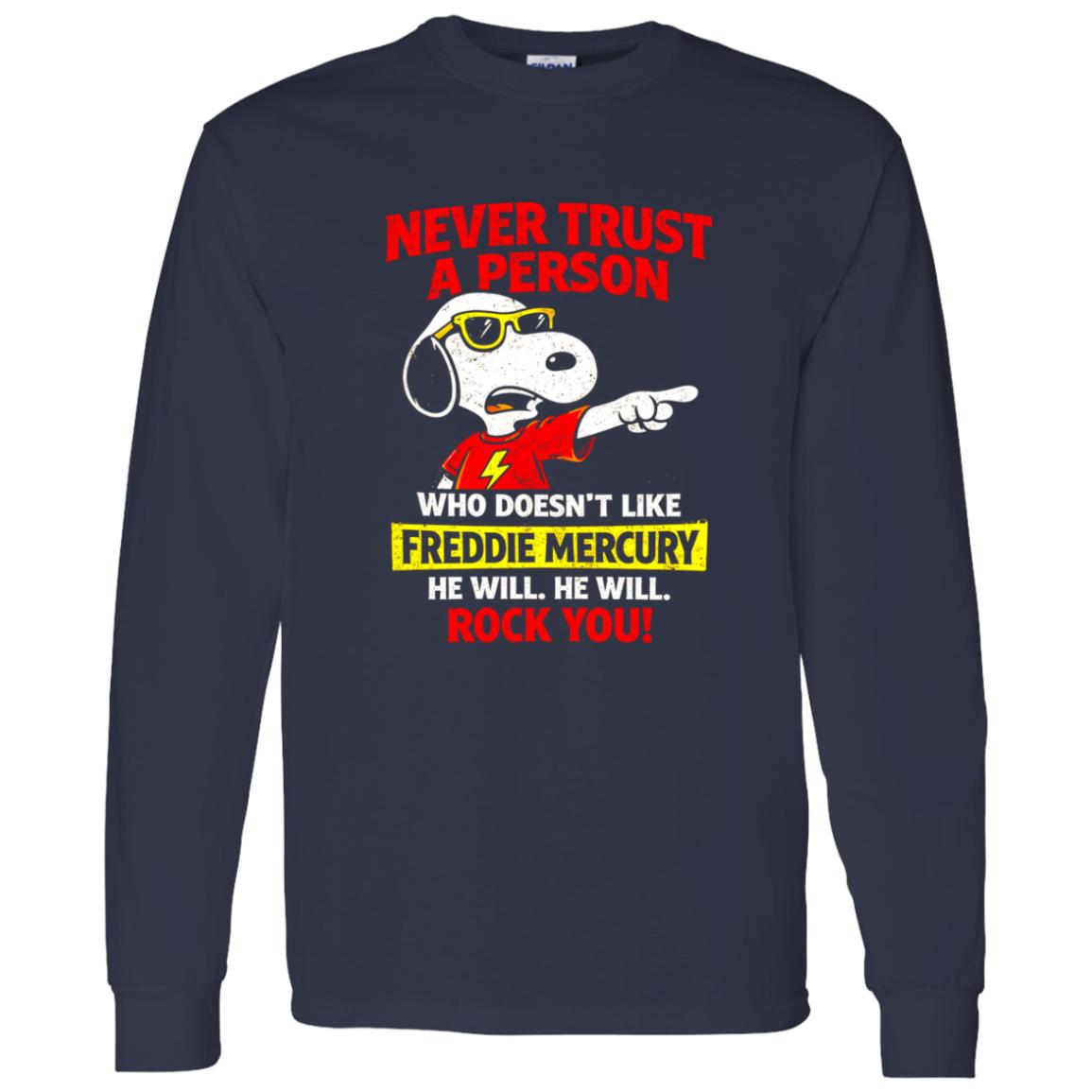
Price range: $21.90 through $44.99
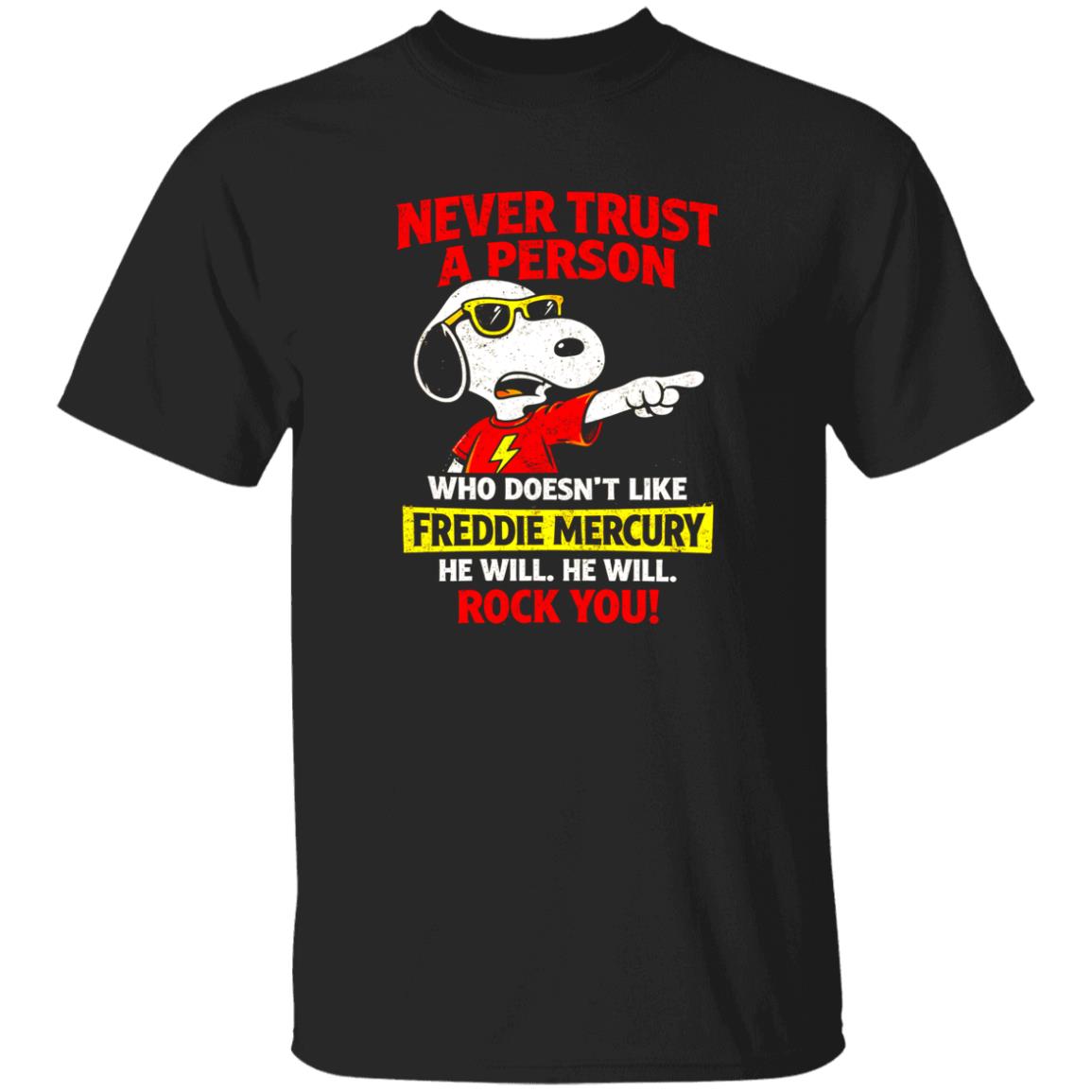
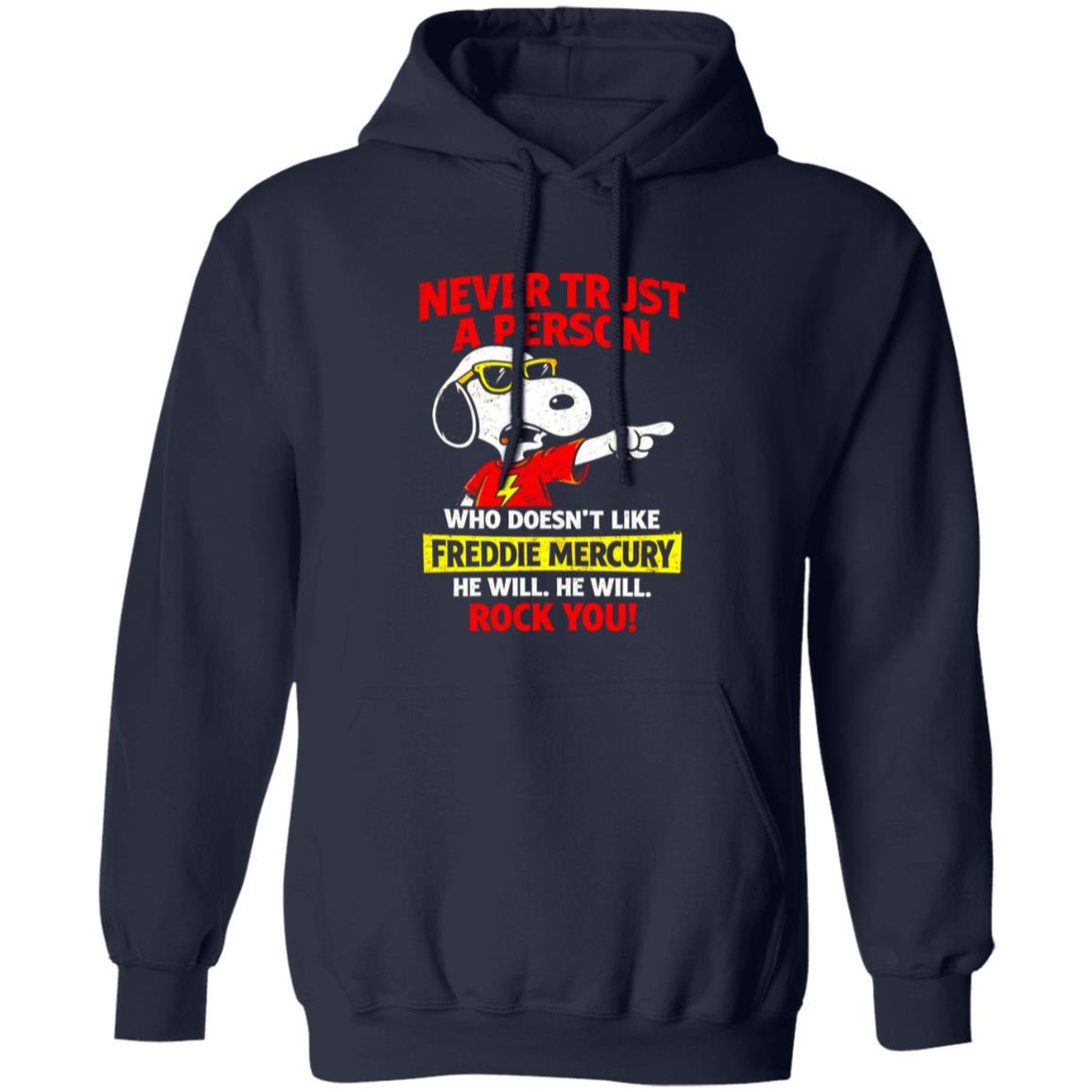
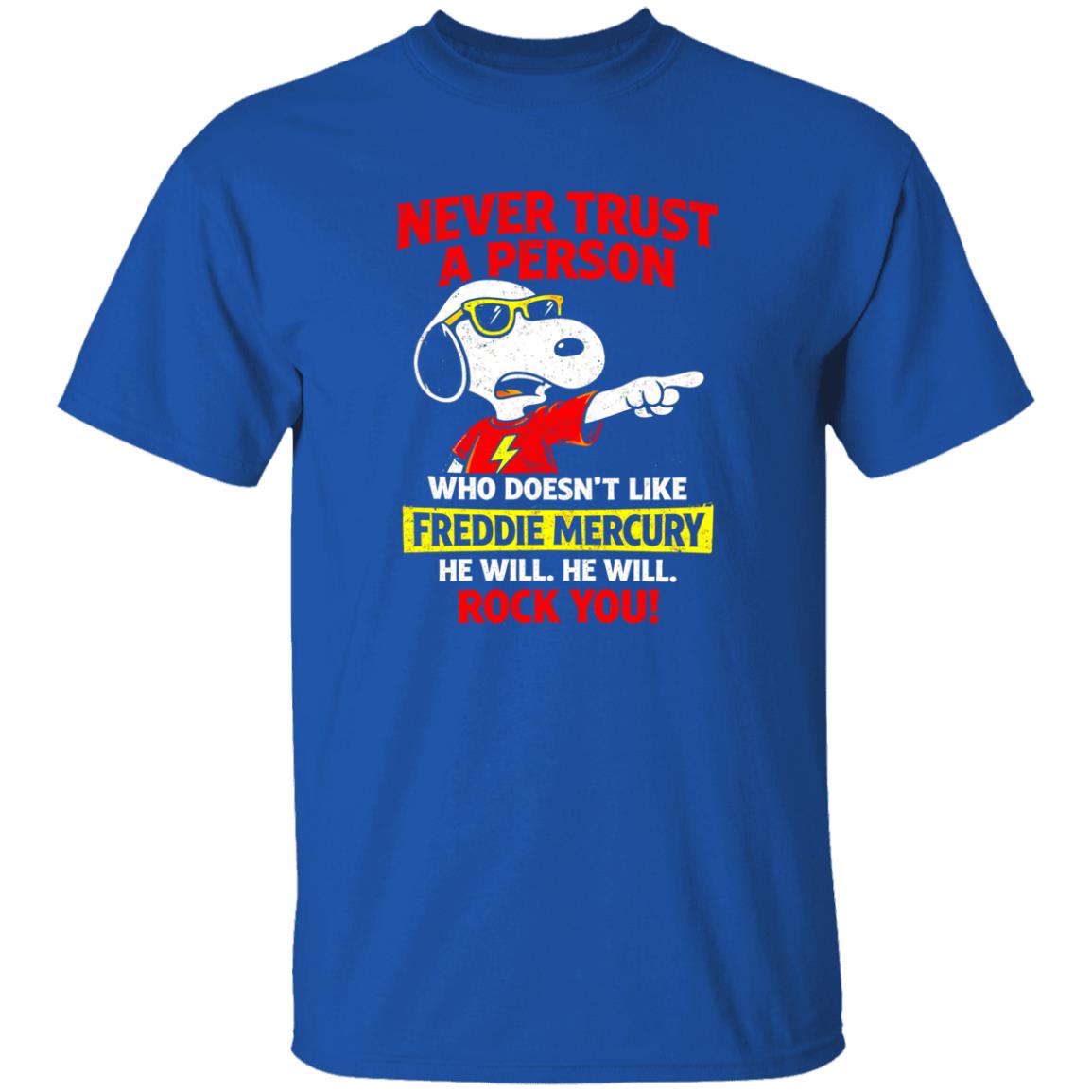
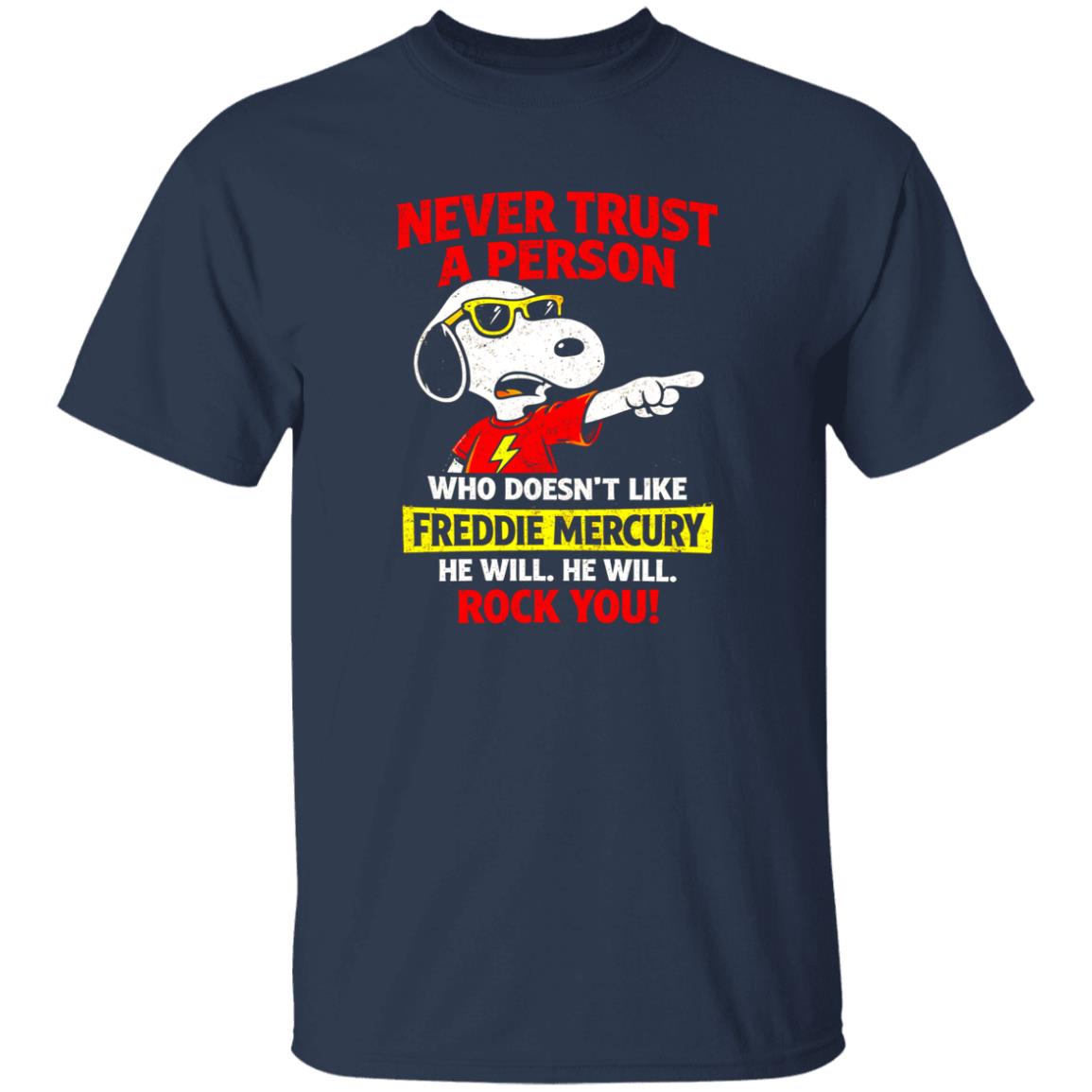
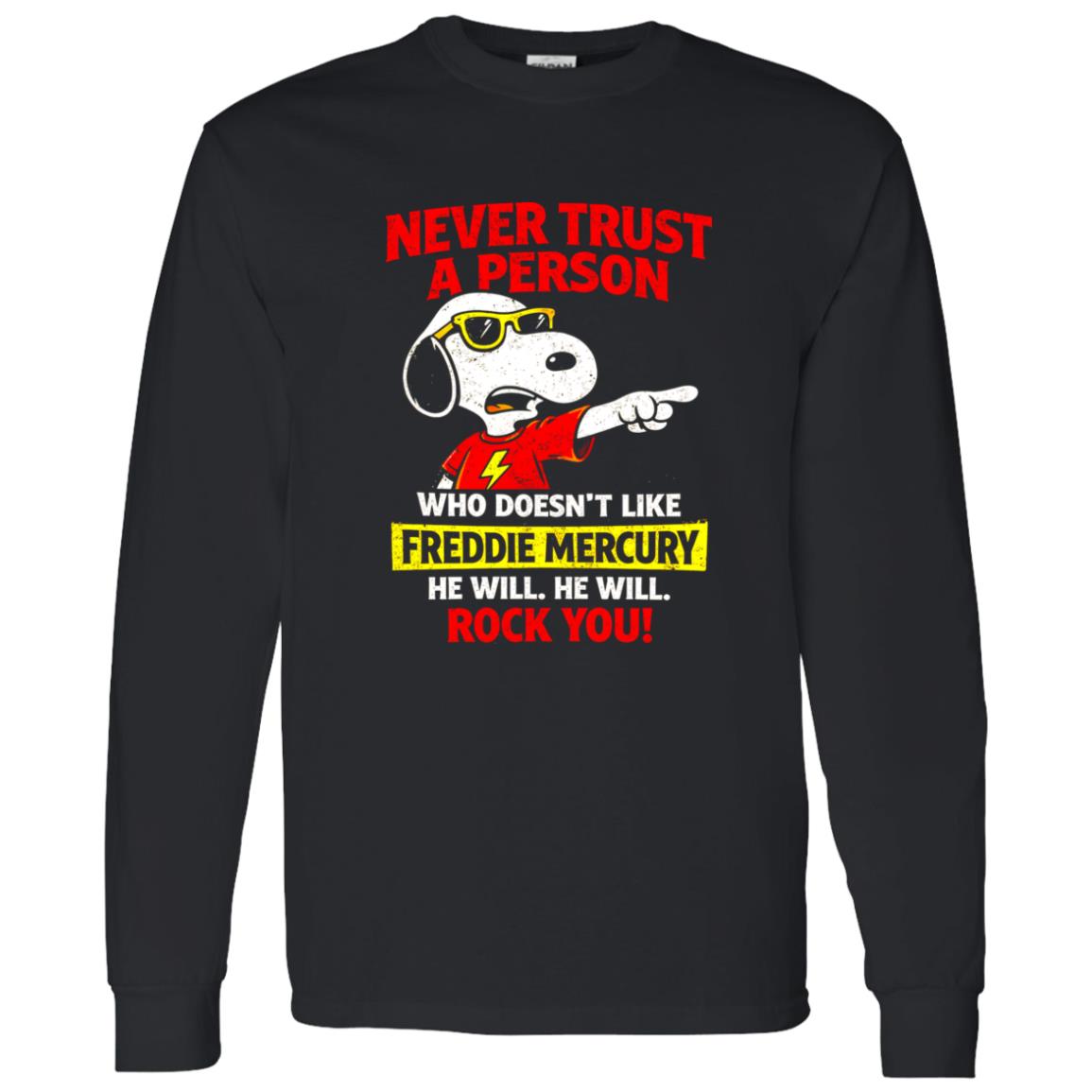
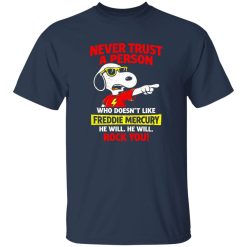
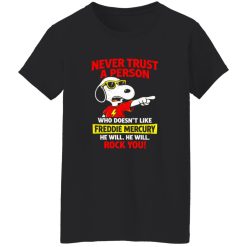
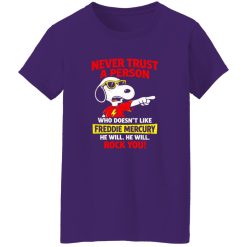
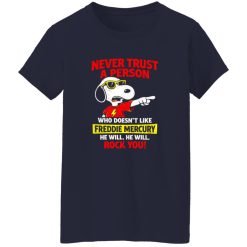
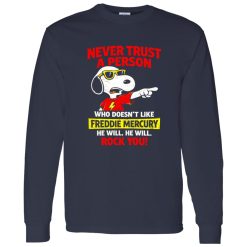
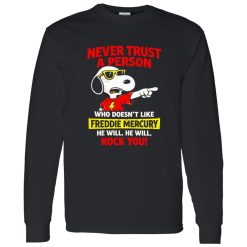
Some graphic shirts are easy to wear and easy to forget. This one does the opposite. The Never Trust A Person Who Doesn’t Like Freddie Mercury Rock You Shirt works because it delivers a strong point of view the moment it enters an outfit, turning a familiar rock reference into something sharper, more personal, and much more style-aware than a standard music tee.
That matters in rock band styling. A shirt tied to Freddie Mercury does not sit quietly in the background. It carries theatrical energy, pop-rock confidence, and a sense of fearless self-expression that changes how the rest of the outfit should be built. Instead of treating it like basic casualwear, the better move is to let it become the visual center of the look, then shape proportion, texture, and attitude around it.
The strongest music tees do more than name-check an icon. They function as identity pieces, and this shirt has that exact effect. The phrase is playful, a little provocative, and instantly readable, which gives it the kind of front-loaded presence that works especially well in the rock band shirts space. You do not need extra noise when the message already carries enough charge.
That is what makes statement centerpiece styling the right lens here. Rather than overbuilding the look, the shirt performs best when the surrounding pieces create control. Dark denim, straight-leg black pants, washed charcoal layers, or even a clean leather jacket all work because they give the graphic room to lead. When a shirt already has verbal attitude, the rest of the outfit should reinforce that confidence rather than compete with it.
It also suits the cultural logic of classic rock styling. Freddie Mercury references carry more than nostalgia. They suggest performance, charisma, movement, and an unapologetic relationship with visibility. In wardrobe terms, that translates into pieces that feel deliberate. The shirt should not be buried under heavy distraction. It should sit where it can be seen, read, and absorbed as the main signal of the look.
The easiest mistake with a bold rock graphic is styling it too literally. Throwing every expected “band tee” item into one outfit usually makes the whole thing feel costume-adjacent. A better approach is to think in terms of silhouette balance. Let the shirt bring the personality, then use the rest of the outfit to sharpen the shape.
Start with the shirt as the dominant visual plane. If worn slightly relaxed, it pairs well with straighter bottoms that hold the line of the outfit together. Black jeans with a clean fall, vintage-washed denim with subtle structure, or tailored cargo pants with minimal pocket bulk all create enough grounding without stealing attention. Footwear should stay consistent with the energy: worn-in boots, classic low-profile sneakers, or darker retro trainers all work because they support the music-led identity without turning the look into a cliché.
Layering needs restraint. A black denim jacket gives the graphic a harder edge. A faded leather jacket pushes the look into full concert-night territory. An open overshirt can work for daytime if the tones stay muted. What matters is drape and visual hierarchy. The shirt must remain readable, and the outer layer should frame it rather than break it apart awkwardly.
For anyone building around this piece as part of a broader music wardrobe, browsing other browse band merch tees can help create variation in mood while keeping the same subcultural backbone. That works especially well when you want one shirt to feel assertive, one shirt to feel vintage, and another to feel more understated.
Accessories should stay selective. Rings, a simple chain, dark sunglasses, or a worn belt can reinforce the attitude. Too many visual add-ons, though, start to crowd the message. This shirt already speaks clearly.
In image terms, this is the kind of shirt that reads well from several feet away, not just up close. The graphic message lands first, then the rest of the styling fills in the mood. On-body, it works best with a natural drape that does not cling too tightly or hang too stiffly. The ideal impression is relaxed but intentional, with the print sitting cleanly across the chest and the overall silhouette feeling easy enough for everyday wear but sharp enough for a venue, record-store run, or late-night city setting.
A strong version of the look might involve the shirt under a black jacket with washed jeans and boots, where the fabric movement stays casual but the front graphic remains the center of attention. Another version leans lighter and more daytime-ready: the shirt with straight blue denim, understated sneakers, and no extra styling noise beyond a cuffed sleeve and a clean shape through the leg.
The visual success comes from contrast. The message has personality, so the outfit should offer structure. The rock reference brings cultural familiarity, so the styling should keep it fresh. The result is a shirt that does not feel trapped inside merch logic. It feels wearable in the broader rhythm of modern music-inspired dressing.
Not every graphic tee earns repeated use. Some are novelty buys, worn once for the joke and then forgotten. This one has better staying power because the reference connects with an artist whose image still carries force, while the phrase itself gives the piece enough edge to move beyond simple fandom. It can live inside a wardrobe built around rock band shirts without feeling like background inventory.
There is also a practical reason it works. Informational shoppers want to know whether a shirt like this can actually integrate into real outfits, not just look good in a product thumbnail. The answer is yes, especially for people who lean toward darker palettes, classic denim, layered casualwear, or music-centered personal style. Commercially, that matters because the decision is not only about liking Freddie Mercury. It is about whether the shirt holds its own once it enters rotation.
Picture a small moment before a show: standing outside the venue doors, jacket unzipped, music leaking from nearby speakers, the shirt visible enough to catch attention without trying too hard. That is where a design like this makes sense. It feels social, expressive, and easy to wear, which is exactly what a strong rock shirt should do.
Its best quality is clarity. It knows what it is, and that confidence transfers directly into styling. When a piece can act as both conversation starter and outfit anchor, it earns more than impulse interest. It earns repeat wear.
Yes. The Never Trust A Person Who Doesn’t Like Freddie Mercury Rock You Shirt works well beyond concert settings because its statement graphic pairs naturally with jeans, jackets, boots, and everyday casual layers. The key is keeping the rest of the outfit clean so the message remains the focal point without making the look feel overdone.
The best outfit starts with strong balance. A Freddie Mercury graphic shirt pairs especially well with black or vintage-wash denim, low-profile sneakers or boots, and one outer layer that frames the print cleanly. That combination keeps the styling rooted in rock influence while still feeling wearable in everyday settings.
Not when the styling stays controlled. A bold slogan shirt feels casual-ready when the silhouette is simple and the palette around it stays grounded. The message creates personality on its own, so you do not need exaggerated layers or accessories to make the outfit feel complete.
It fits because it combines cultural recognition with wearable attitude. Rock band shirts perform best when they signal music identity and visual confidence at the same time. This design does both, using a Freddie Mercury reference that feels iconic while still functioning as a modern statement piece.
| Product | Never Trust A Person Who Doesn’t Like Freddie Mercury Rock You Shirt |
|---|---|
| SKU | cc-1049-9953-108606860-1774060802620 |
| Fabric Weight | Midweight (5.3 oz) – Heavyweight (6.0 oz Long Sleeve) |
| Material Composition | Solid Colors: 100% Cotton Ash Grey: 99% Cotton / 1% Polyester Sport Grey: 90% Cotton / 10% Polyester Dark Heather: 50% Cotton / 50% Polyester |
| Fit | Classic Unisex Fit (Ladies: Slightly Tapered Missy Fit) |
| Construction | Double-needle stitching Taped neck & shoulders Preshrunk jersey knit Tearaway label |
| Hoodie Material (G185) | 8.0 oz – 50% Cotton / 50% Polyester |
| Available Sizes | S – 5XL (6XL select colors only) |
| Origin | Made with sustainably and fairly grown USA cotton; Printed in USA |
| Print Method | DIGISOFT® Direct-to-Garment (DTG) |
| Brand | Capital T Shirt |
| Fast & Reliable Shipping | All orders are professionally printed and shipped from the USA. |
|---|---|
| Processing Time | Printed on demand within 1–3 business days. |
| Shipping Time | USA: 4–7 business days International: 7–15 business days |
| Shipping Costs | USA Standard: $5.99 International Standard: $9.99 |
| Secure Checkout | Safe & encrypted payment processing. Your information is protected at all times. |
| Returns & Exchanges | We offer a 30-day return policy. View Refunds & Returns Policy |
| Customer Guarantee | We stand behind the quality of every item we print. |


Reviews
There are no reviews yet.