
No products in the cart.


Music T Shirts
History of Band T Shirts: From Tour Merch to Cultural Icon

25
Feb
Feb
What Are Band T Shirts?
Band T shirts are graphic tees featuring a musical artist’s name, logo, album artwork, or tour dates, originally sold as concert merchandise and now worn as cultural identity pieces. What began as simple promotional apparel in the 1960s became collectible memorabilia, then fashion staples, and today represent both nostalgia and modern music culture.
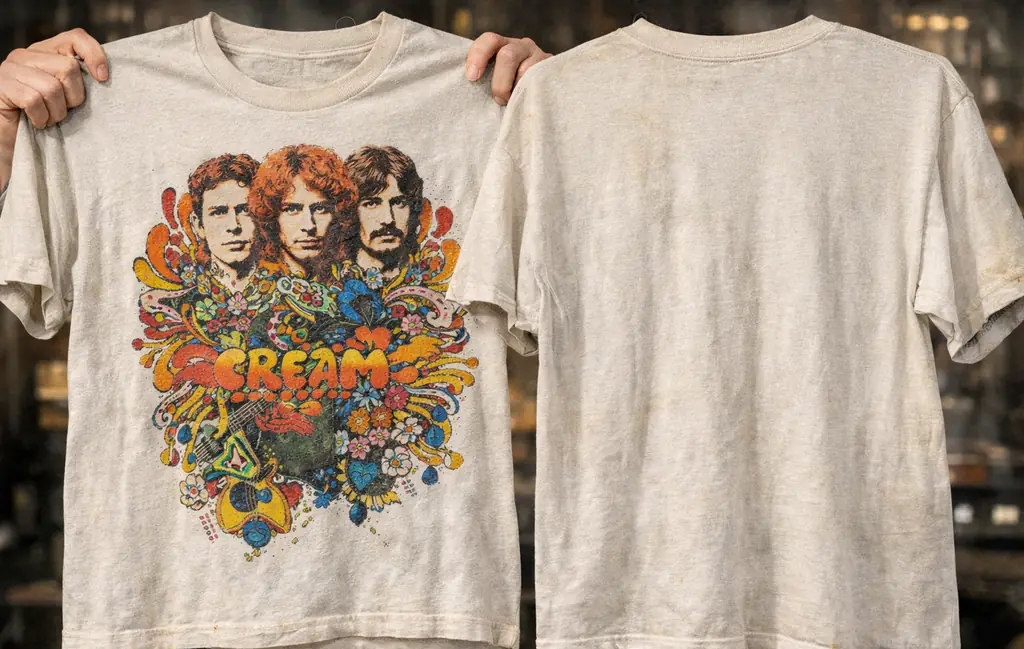
The Origins: How Concert Merch Began (1960s–Early 1970s)
Before stadium tours and global merch empires, music merchandise was informal, experimental, and often DIY.
In the late 1960s, artists began printing simple logos on cotton tees to sell outside venues. These early shirts weren’t high-design. They were functional. Basic ink, lightweight cotton, minimal structure. But culturally? They were revolutionary.
When did band T shirts become popular?
They gained real traction in the early 1970s as rock concerts moved from small clubs into arenas. Larger audiences meant higher demand for memorabilia. Fans didn’t just want to hear the music — they wanted to take a piece of the experience home.
Production at this stage was primitive compared to modern standards:
- Thin cotton blanks (often under 5 oz)
- Basic screen printing techniques
- Limited color palettes
- No standardized licensing control
But scarcity created emotional value. These weren’t mass-retail items. They were moment-specific artifacts.
The First Cultural Shift
The shirt stopped being a souvenir and started becoming a badge. Wearing it weeks later signaled tribal affiliation. You weren’t just a listener. You were inside the culture.
The Rock Explosion: Arena Era & Identity Signaling (Mid–Late 1970s)
The 1970s transformed band T shirts from merch tables to mainstream cultural markers.
Arena rock amplified everything — louder music, bigger tours, larger audiences, more elaborate graphics. Album artwork became central design inspiration. Tour dates began appearing on the back, turning shirts into wearable tour posters.
This era also introduced something critical:
Brand identity through graphics.
Bold typography. Iconic logos. Visual storytelling. A shirt didn’t just say you liked a band — it told people which genre tribe you belonged to.
From a production standpoint, printing techniques improved:
- Heavier cotton blanks
- More consistent screen registration
- Expanded ink layering
- Better durability
This is also where what we now categorize as Rock Band Shirts truly solidified. The aesthetic became recognizable — aggressive fonts, high-contrast artwork, tour lists stacked on the back.
Contrary to modern fast-fashion cycles, these designs weren’t trend-driven. They were identity-driven. That difference matters.
Why This Era Still Influences Modern Design
Many modern music tees intentionally mimic 70s proportions — slightly boxy cuts, bold center chest prints, distressed finishes. That’s not nostalgia for nostalgia’s sake. It’s psychological continuity.
The 1970s created the blueprint for what still feels “authentic.”
The 80s: Metal, Mass Licensing & Commercial Acceleration
If the 70s built the cultural foundation, the 80s industrialized it.
Heavy metal bands pushed graphic intensity to new extremes. Skulls, flames, hyper-detailed illustrations. Prints became larger. Ink layers became thicker. The shirt turned into a visual spectacle.
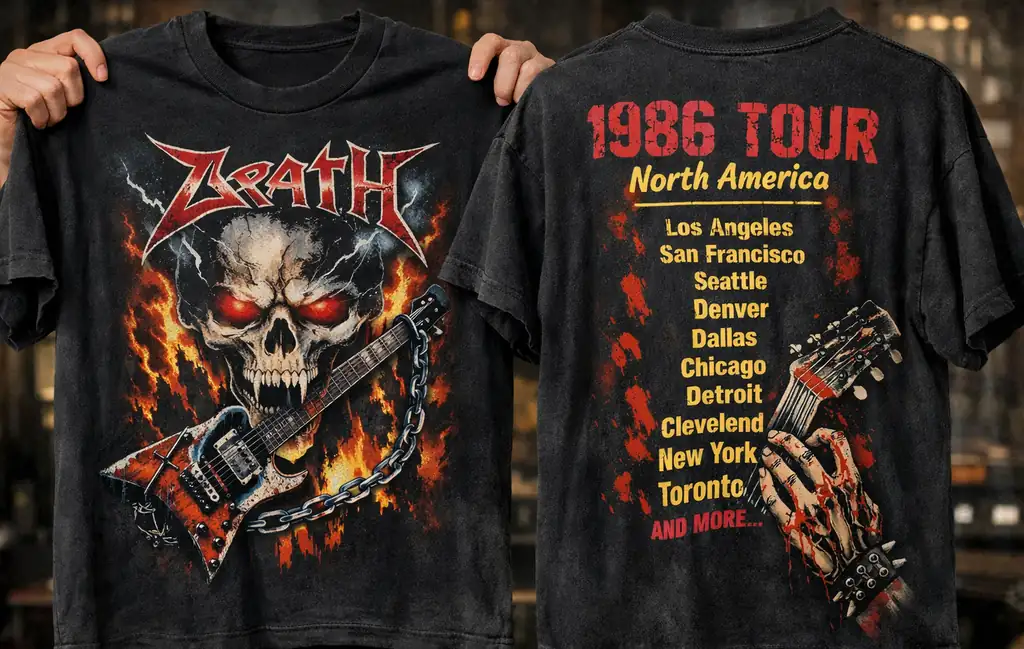
But here’s the critical shift:
Licensing became structured.
Major labels and merch companies began formalizing production and distribution. This moved band T shirts from bootleg-heavy parking lot culture into legitimate retail channels.
How were band T shirts originally made compared to the 80s?
Originally, many were small-batch and loosely controlled. By the 80s, centralized licensing meant higher production volume, improved consistency, and broader geographic reach.
Commercial temperature rose sharply. Shirts were no longer just souvenirs — they were revenue engines.
The Double-Edged Sword of Scale
Mass production improved durability but reduced scarcity. This tension still exists today:
- Higher availability
- Lower exclusivity
- Stronger brand recognition
- Weaker underground credibility
This era laid groundwork for what would later fuel the vintage market — because scarcity would return in unexpected ways.
The 90s: Grunge, Streetwear & Irony
The 1990s changed the emotional tone of band T shirts.
Grunge rejected excess. Graphics became rawer, sometimes intentionally imperfect. Faded inks. Softer cotton. Less polish. Authenticity shifted from bold spectacle to understated rebellion.
Simultaneously, hip-hop and early streetwear began adopting vintage rock tees as layered styling pieces. A subtle shift occurred:
The shirt didn’t need to represent the wearer’s current playlist.
It represented cultural literacy.
Are band T shirts still in style? Absolutely — because the 90s cemented them as fashion-neutral identity pieces rather than time-bound concert relics.
The Rise of the “Single Stitch” Mythology
Many 80s and early 90s tees featured single-stitched hems — a production detail that later became a signal of authenticity in resale markets.
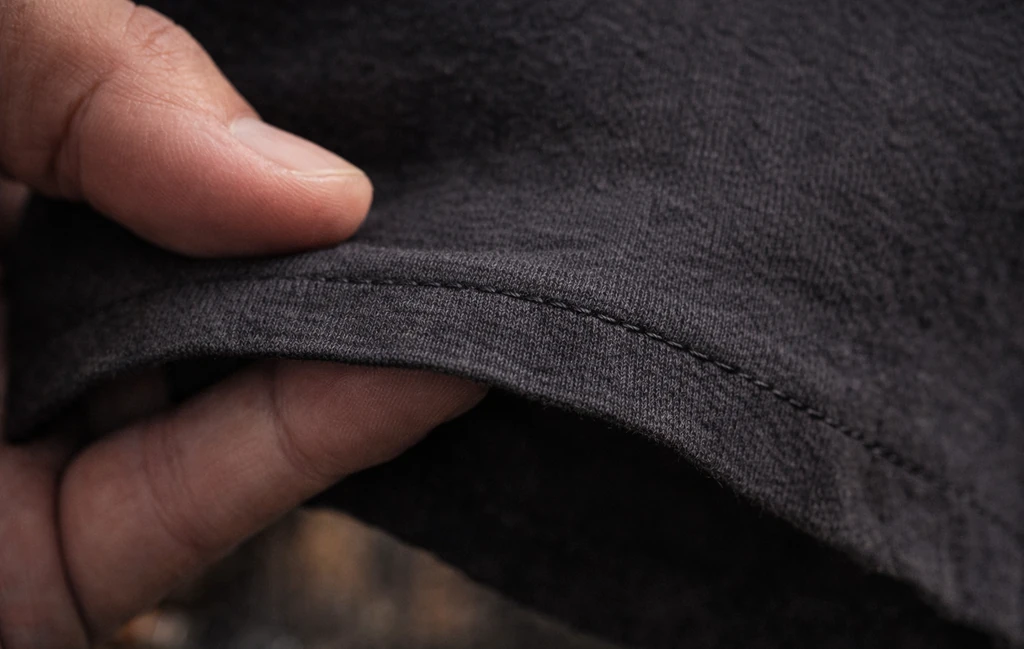
Over time, collectors began using construction details to verify age. Fabric weight, stitching style, ink cracking — all became part of valuation logic.
This is where Vintage Band Tees began transforming from used clothing into collectible assets.
Why are vintage band tees expensive?
Because scarcity, nostalgia, and condition intersect. Once a tour ends, that design stops being produced. Over decades, surviving pieces diminish. Demand, however, grows.
The 6 Eras of Band T Shirt Evolution
- 1960s: Experimental concert souvenirs
- 1970s: Arena rock identity badges
- 1980s: Licensed mass-production & metal graphics
- 1990s: Grunge authenticity & streetwear crossover
- 2000s: Corporate merch saturation
- 2010s–2020s: Vintage revival & premium reinterpretation
Each era didn’t erase the previous one. It layered on top of it. That layering explains why today’s market contains bootlegs, luxury reinterpretations, authentic reprints, and true vintage originals — all coexisting.
Understanding that layered evolution is critical before buying, collecting, or designing.
The 2000s: Corporate Merch Saturation & The Identity Crisis
By the early 2000s, band T shirts had reached full commercialization. Global distribution channels, online stores, mall retailers, and licensing conglomerates scaled production to unprecedented levels.
On paper, this was success.
In reality, it created dilution.
Design cycles accelerated. Quality varied widely. Some shirts were produced with thinner cotton, overly glossy prints, and rushed artwork repurposed for mass sales. The emotional connection that once came from tour-specific exclusivity began fading.
What changed most in this era?
- Shift from tour-exclusive drops to perpetual retail availability
- Increased use of lightweight fabrics for cost control
- Higher print saturation using plastisol-heavy techniques
- Retail-first strategy over concert-first strategy
This period explains a common buyer objection today: “Are modern band tees lower quality than vintage?”
The honest answer: some were. Many weren’t engineered for longevity — they were engineered for volume.
But market saturation created a counter-movement.
Consumers began craving authenticity again.
The Vintage Boom: Scarcity, Collectibility & Cultural Capital
In the 2010s, something unexpected happened.
Vintage band T shirts stopped being thrift-store finds and became investment-grade collectibles.
Resale marketplaces exploded. Auction listings for rare 80s metal tour tees began reaching four and even five figures. Scarcity mechanics returned — but this time fueled by global digital demand.
What is the most valuable band T shirt?
Highly rare original tour prints from major 70s and 80s bands in excellent condition can command thousands of dollars, especially if tied to culturally significant tours.
Why?
Because they represent three overlapping values:
- Historical relevance — tied to a specific tour or era
- Production authenticity — single stitch, era-correct cotton, period ink
- Cultural symbolism — association with identity, rebellion, nostalgia
This resurgence elevated what we now categorize as Vintage Band Tees from aesthetic choice to collectible category.
But here’s the nuance competitors rarely explain:
Vintage value isn’t just about age. It’s about cultural timing. A mediocre band from 1984 won’t carry the same demand curve as an era-defining tour.
Scarcity without cultural impact doesn’t create value.
How Production Changed: Fabric, Ink & Construction Matter More Than You Think
To understand the evolution of band T shirts, you have to examine the garment itself — not just the artwork.
1. Fabric Weight Evolution
1960s–70s shirts often used lighter cotton, typically under 5 oz. By the 80s, heavier blanks (5–6 oz) became common, giving prints more structure and durability.
Modern premium reinterpretations frequently return to mid-weight cotton (5.3 oz–6 oz) to balance softness with structure.
2. Stitch Construction
Single stitch hems were common in older tees due to machinery limitations. Double stitching became standard in the mid-to-late 90s for durability and manufacturing efficiency.
Collectors now use stitching as an authentication signal — even though stitching alone doesn’t guarantee value.
3. Ink & Print Technique
Early shirts used basic screen printing with thinner ink layers. 80s metal tees often used thick plastisol applications. Over time, distressed and discharge techniques emerged to create a softer, vintage feel.
Today, high-quality music graphic tees often blend:
- Screen printing precision
- Controlled distressing
- Balanced ink density for breathability
This is where modern reinterpretations, like curated Music Graphic Tees, differentiate themselves from mass-produced novelty shirts.
Production isn’t cosmetic. It determines longevity.
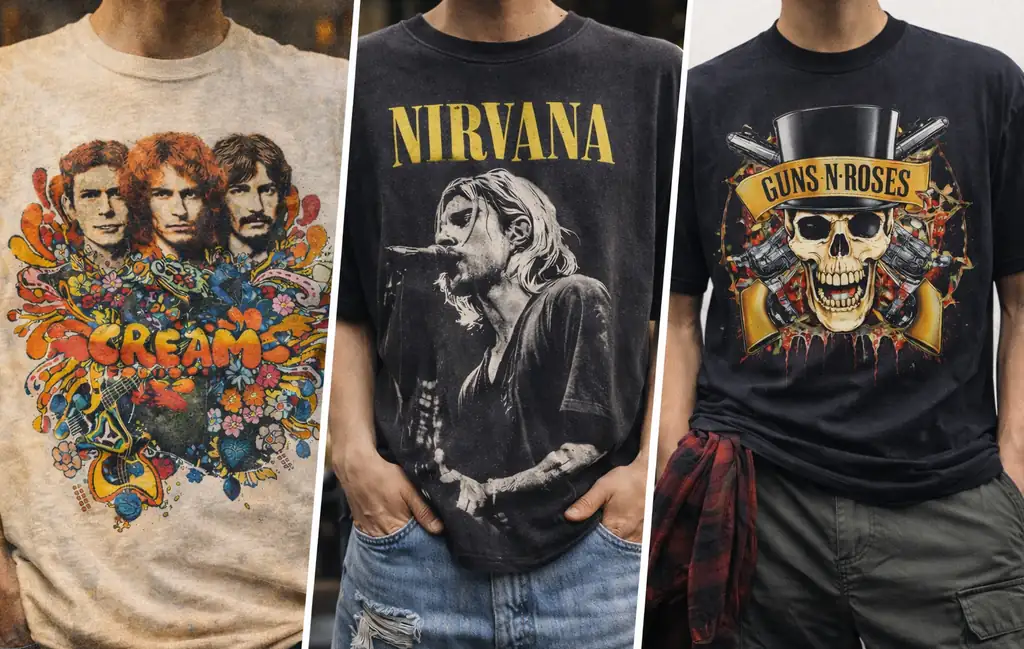
Why Band T Shirts Still Matter in 2026
Band T shirts have survived five decades of fashion cycles because they solve something deeper than style.
They answer identity questions.
Who are you?
What do you stand for?
Which era shaped you?
In a digital-first culture, physical artifacts carry amplified weight. Wearing a band tee isn’t just nostalgia — it’s cultural positioning.
Why do celebrities wear vintage band tees?
Because they signal cultural literacy. The shirt communicates taste without explanation.
Modern consumers — especially 18–35-year-old music culture enthusiasts — don’t just want logos. They want context. Story. Credibility.
That’s why understanding the history behind what you wear elevates it.
Are Band T Shirts Still in Style — Or Are They Timeless?
Trend-based fashion rotates every season.
Band T shirts operate differently.
They resurface, fade slightly, then resurface stronger — because each generation reinterprets them.
- Gen X wore them as live-event proof.
- Millennials embraced them through grunge revival.
- Gen Z integrates them into streetwear layering.
What changes isn’t relevance — it’s styling context.
That’s why the broader Music T Shirts collection category continues strengthening as both cultural archive and wearable staple.
If you appreciate the legacy, the next step isn’t collecting randomly. It’s choosing intentionally.
How to Choose the Right Era-Inspired Band T Shirt
Once you understand the historical layers, buying becomes more strategic.
1. Decide the Era You Identify With
Are you drawn to bold 70s arena graphics? Hyper-detailed 80s metal art? Faded 90s minimalism?
2. Evaluate Fabric & Structure
Look for mid-weight cotton (around 5.3 oz or heavier). Avoid paper-thin blends if longevity matters.
3. Analyze Print Quality
Does the ink sit stiffly on top of the shirt? Or does it integrate naturally into the fabric?
4. Understand Licensing & Authenticity
Officially licensed reproductions offer durability and ethical sourcing. True vintage offers scarcity — but higher price and condition risk.
For a deeper breakdown on selecting high-quality music apparel, explore our detailed guide:
Music T Shirts Guide
Choosing intelligently bridges nostalgia with modern durability.
Common Objections — Answered Clearly
“Is modern production inferior to vintage?”
No — when done correctly. Modern printing can outperform vintage durability if proper blanks and ink techniques are used.
“Is vintage always better?”
Not necessarily. Vintage carries emotional and collectible value, but condition, fit, and fabric degradation can be trade-offs.
“Are they worth the price?”
If the shirt carries cultural relevance, durable construction, and aesthetic longevity — yes. Cheap novelty prints fade. Well-made music tees age with character.
The key is understanding what you’re buying — history, fashion, or artifact.
Band T Shirts as Cultural Artifacts — Not Just Apparel
Here’s the perspective most surface-level guides miss:
Band T shirts are wearable timestamps.
Every era imprinted its values onto cotton — rebellion in the 70s, spectacle in the 80s, anti-polish authenticity in the 90s, oversaturation in the 2000s, and intentional revival in the 2010s and beyond.
That’s why two shirts featuring the same band can feel completely different depending on cut, print technique, and graphic style. They represent different cultural moments.
This is also why serious collectors don’t just ask, “What band?” They ask:
- Which tour?
- Which year?
- Which print run?
- Which blank manufacturer?
That level of scrutiny might sound extreme — but it reflects something deeper. A band tee isn’t just clothing. It’s narrative compression.
The Psychology Behind Why We Wear Band T Shirts
Why do people continue wearing band T shirts decades after their favorite album dropped?
Because music shapes identity during formative years. And identity, once formed, seeks reinforcement.
Wearing a band tee accomplishes three psychological functions:
- Belonging: It signals tribal alignment without verbal explanation.
- Memory anchoring: It reconnects the wearer to a specific emotional era.
- Cultural positioning: It communicates taste and literacy.
This explains why the history of band T shirts matters commercially. People don’t buy them like novelty tees. They buy them as extensions of self.
Understanding this psychology shifts how brands should design — and how consumers should choose.
Bootlegs, Reprints & Modern Interpretations — What’s the Difference?
As demand increased, new categories emerged:
1. Original Vintage
Produced during the actual tour or era. Limited supply. High scarcity.
2. Official Reprints
Licensed reproductions of historical designs using modern production standards.
3. Bootlegs
Unauthorized prints, historically sold outside venues or through underground channels.
4. Contemporary Interpretations
New designs inspired by music culture rather than direct album artwork.
Each serves a different purpose.
If your goal is collecting, authenticity and era matter most. If your goal is long-term wearability with modern durability, high-quality reinterpretations often make more sense.
This is where curated collections — especially thoughtfully structured Rock Band Shirts and era-inspired graphics — bridge heritage with craftsmanship.
How to Spot Quality in Modern Band T Shirts
Not all modern band T shirts are engineered equally. Here’s a practical quality checklist rooted in production logic:
- Fabric weight: Aim for 5.3 oz or heavier for structure and longevity.
- Fiber composition: 100% cotton offers better aging characteristics than low-quality blends.
- Print integration: Ink should feel integrated, not like a plastic layer sitting stiffly on top.
- Collar recovery: Ribbing should hold shape after stretch.
- Graphic balance: Proportions should respect chest placement — not oversized to compensate for weak design.
These factors determine whether a shirt fades into irrelevance — or improves with wear.
Well-made pieces don’t just survive washes. They develop character.
FAQ — History & Evolution of Band T Shirts
When did band T shirts become mainstream?
They became mainstream in the 1970s as arena rock tours expanded and merchandise sales scaled. What began as simple concert souvenirs evolved into identity markers and fashion staples.
Why are vintage band tees so expensive?
Value comes from scarcity, cultural relevance, and condition. Once a tour ends, production stops. Decades later, limited surviving pieces combined with nostalgia and collector demand drive prices upward.
Are modern band T shirts lower quality than old ones?
Not inherently. Some 2000s mass-market releases prioritized volume over durability, but modern premium brands often use heavier cotton and refined printing techniques that outperform many vintage originals.
What makes a band T shirt authentic?
Authenticity depends on context. True vintage pieces were produced during the original tour. Official reprints are licensed reproductions. Bootlegs are unauthorized prints. Construction details and licensing information help verify origin.
Are band T shirts still in style in 2026?
Yes. They function as cultural identity pieces rather than trend-based fashion. Each generation reinterprets them through contemporary styling, keeping them relevant across decades.
Final Reflection: From Tour Merch to Cultural Currency
The evolution of band T shirts mirrors the evolution of music itself — raw beginnings, explosive growth, commercialization, reinvention, and revival.
What started as simple cotton souvenirs became global cultural currency.
Today, choosing one isn’t just about liking a band. It’s about aligning with an era, a sound, a feeling.
If you understand the history, you don’t buy randomly. You select with intention.
Explore the full Music T Shirts collection to discover pieces that honor the legacy — engineered with modern durability and cultural awareness in mind.
The shirt you wear today becomes tomorrow’s artifact.

Related Posts: