
No products in the cart.
Rock Band Shirts
Vintage vs Modern Rock Band T Shirts: What Really Sets Them Apart?
29
Mar
Mar
Few pieces of music merchandise have the cultural weight of a rock band T-shirt. From stadium tours in the 1970s to modern streaming-era fan culture, these shirts have evolved from simple concert souvenirs into powerful fashion statements. Today, the debate around vintage vs modern rock band T shirts goes beyond nostalgia. It touches on authenticity, fabric feel, graphic style, and even collecting value.
Some fans swear by authentic vintage band tees with cracked prints and faded cotton. Others prefer the clean graphics and dependable quality of modern band merchandise. Understanding the difference helps fans choose the style that fits both their wardrobe and their connection to music culture.
In this guide, we’ll break down how vintage band shirts differ from modern designs in materials, printing technology, durability, cultural significance, and everyday wearability.
Vintage vs Modern Rock Band T Shirts: Quick Comparison
Vintage band shirts typically refer to original merchandise produced during earlier music eras—especially the 1970s through the 1990s. Modern rock band shirts are contemporary releases designed using current production methods and fabrics.
The biggest differences appear in fabric aging, graphic printing styles, fit, and collectability.
Here is a quick breakdown:
- Age and authenticity – Vintage shirts were produced decades ago, often tied to specific tours.
- Fabric feel – Vintage cotton becomes softer over time due to repeated wear and washing.
- Graphic style – Older prints often show natural cracking or fading.
- Fit – Vintage tees typically have a boxier silhouette compared to modern cuts.
- Availability – Authentic vintage shirts are rare, while modern designs are widely produced.
This distinction explains why some vintage band shirts can sell for hundreds of dollars on resale markets while modern ones remain accessible to everyday fans.
What Defines a Vintage Rock Band T Shirt?
Not every shirt with a retro design qualifies as vintage. True vintage band tees are original garments produced during the time when the band was touring or releasing music. That means a shirt printed in the 1980s for a stadium tour is genuinely vintage, while a reprint made decades later is technically modern merchandise.
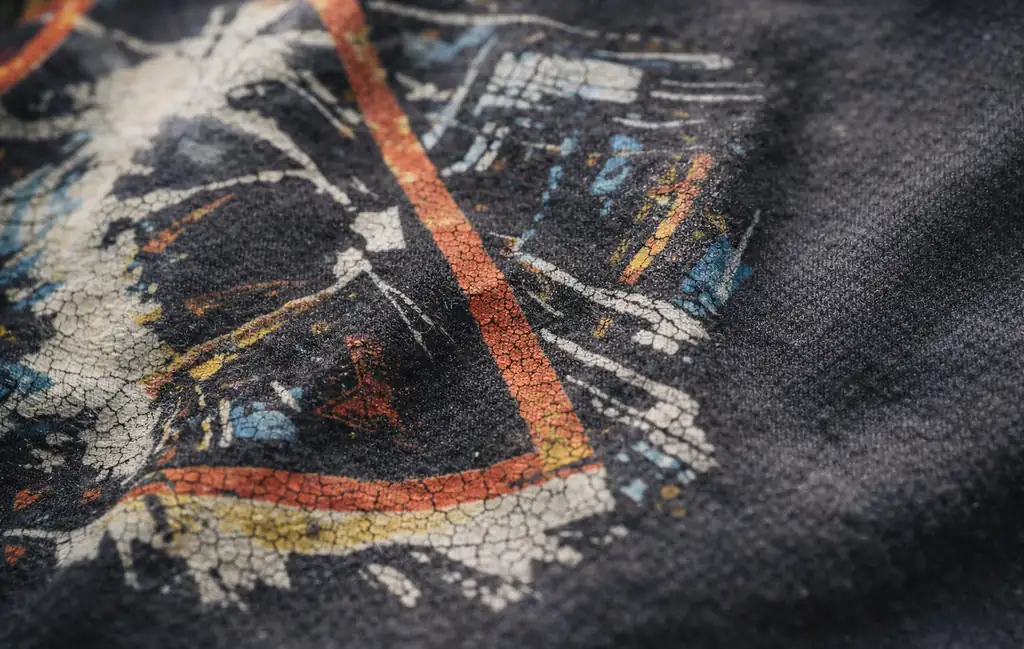
Collectors usually identify vintage pieces through a combination of tags, print techniques, and natural wear patterns. Over time, cotton fibers soften and graphics begin to show subtle cracking where ink has aged. These visual details are often considered signs of authenticity rather than flaws.
Because they capture a specific moment in music history, vintage shirts often feel like cultural artifacts. Wearing one can feel less like putting on a T-shirt and more like wearing a piece of rock history.
Fans interested in the technical characteristics of older band tees can explore a deeper explanation in this guide on what makes a band tee vintage.
Key Differences Between Vintage and Modern Band Shirts
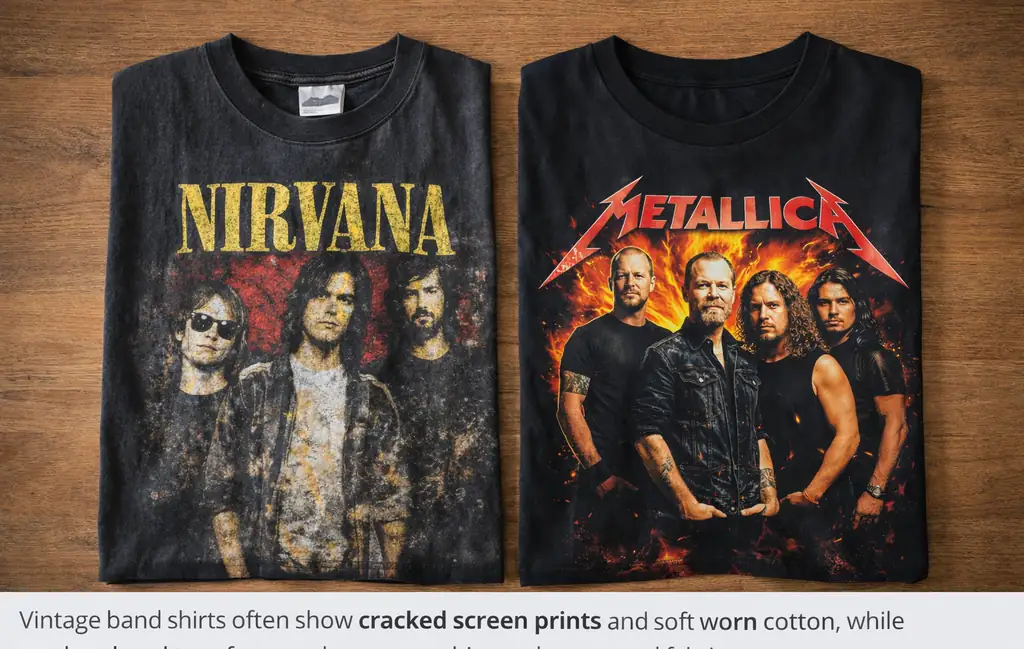
When comparing vintage and modern shirts side by side, the differences become easier to see. The changes are not just aesthetic—they reflect decades of evolution in apparel production.
Fabric and Material
Vintage shirts were typically made from classic heavyweight cotton fabrics. After years of wear, those fabrics become incredibly soft and flexible. The cotton fibers loosen slightly with washing, giving the shirt that distinctive “broken-in” feel many fans love.
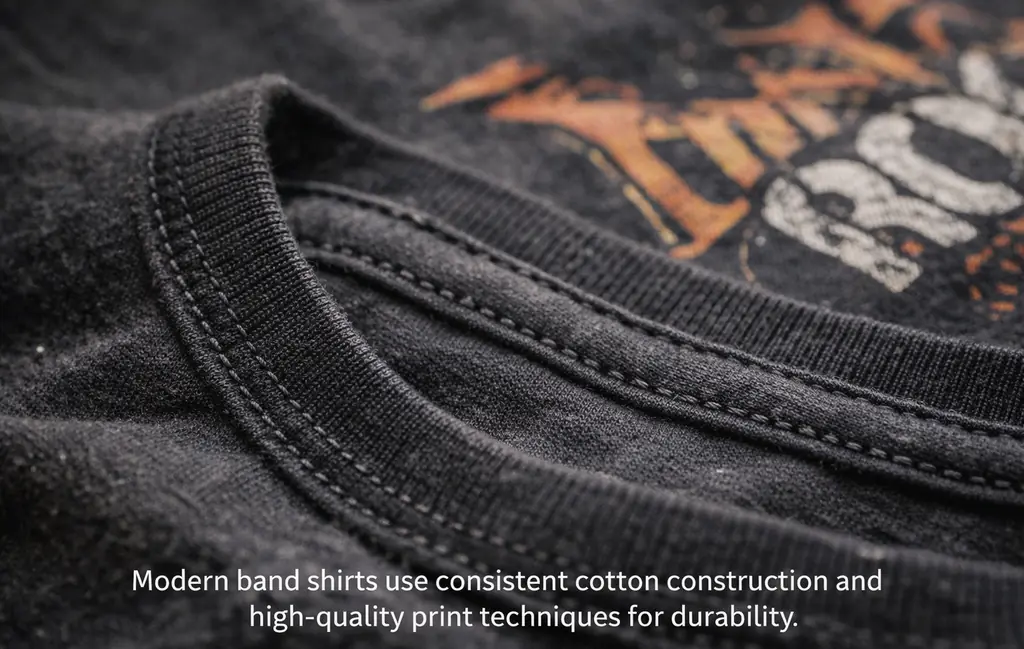
Modern rock band shirts still rely on cotton construction, but the fabric is new and structured. Many contemporary shirts use durable cotton with consistent weaving and shape retention. For example, classic unisex band shirts commonly use 5.3 oz heavyweight cotton, which balances durability with everyday comfort.
Printing Technology
Vintage graphics were usually created through traditional screen printing methods. Over time, those prints develop the familiar cracked look that collectors appreciate.
Modern shirts use advanced printing methods such as high-definition digital decoration. These processes create sharper artwork and improved color retention while maintaining a soft-hand feel on the fabric. The result is a graphic that stays vibrant longer and resists cracking compared to older ink formulas.
Fit and Construction
Vintage tees were designed with a straightforward boxy fit that reflected the style of earlier decades. Shoulders were wider, sleeves were slightly shorter, and overall silhouettes were looser.
Modern band shirts offer more consistent sizing and often feel slightly more tailored while still keeping a classic unisex shape. Reinforced seams and taped neck construction also help maintain structure after repeated washing.
Durability
Vintage shirts can last for decades, but their longevity often depends on how they were stored and worn. Some pieces remain in excellent condition, while others show heavy fading or thinning fabric.
Modern shirts benefit from improved textile consistency and updated printing technology. That means they tend to hold their color and structure longer during regular wear.
Why Vintage Band Tees Became So Valuable
Vintage band shirts gained massive popularity during the rise of streetwear and resale culture. Fashion enthusiasts began treating them as collectible items, similar to rare sneakers or limited vinyl records.
Several factors drive their value:
- Connection to historic tours or album releases
- Limited production numbers
- Natural aging that cannot be replicated perfectly
- Celebrity influence and fashion trends
When musicians, stylists, and fashion icons started wearing vintage band tees publicly, demand surged. Suddenly a shirt that originally sold for twenty dollars at a concert could command hundreds on resale platforms.
The nostalgia associated with classic rock also plays a role. Shirts tied to influential decades—especially the 1980s and 1990s—often become the most sought-after items. Those eras defined the visual language of band merchandise with bold graphics, tour dates, and album art.
If you’re curious about how specific decades shaped band shirt aesthetics, guides like the 1980s rock band shirts guide explore how those designs influenced modern music fashion.
Benefits of Modern Rock Band Shirts
While vintage shirts attract collectors, modern band merchandise offers several practical advantages that everyday fans appreciate.
First, availability is dramatically better. Authentic vintage pieces are limited, but modern designs can be produced in a wide range of sizes and colors. This accessibility makes it easier for fans to represent their favorite artists.
Second, fabric consistency improves the wearing experience. Contemporary cotton shirts maintain their shape through repeated washing, and reinforced seams help prevent stretching around the collar.
Printing technology also plays a major role. High-definition print methods allow detailed artwork and smooth ink application. The result is a graphic that feels softer against the fabric while maintaining vibrant color over time.
For fans who want a shirt they can wear frequently without worrying about damaging a collectible item, modern band tees offer the perfect balance between style and practicality.
Many fans begin exploring these designs through curated collections like the rock band shirts category, where modern prints reinterpret classic music imagery for everyday wear.
Ultimately, choosing between vintage and modern often depends on personal priorities. Some people value historical authenticity, while others prefer durability and accessibility.
Both approaches celebrate the same core idea: music culture expressed through clothing.
As we continue, we’ll explore how these shirts influence everyday style, how to identify authentic vintage pieces, and how to decide which option best fits your wardrobe.
Vintage vs Modern Band Shirts for Everyday Style
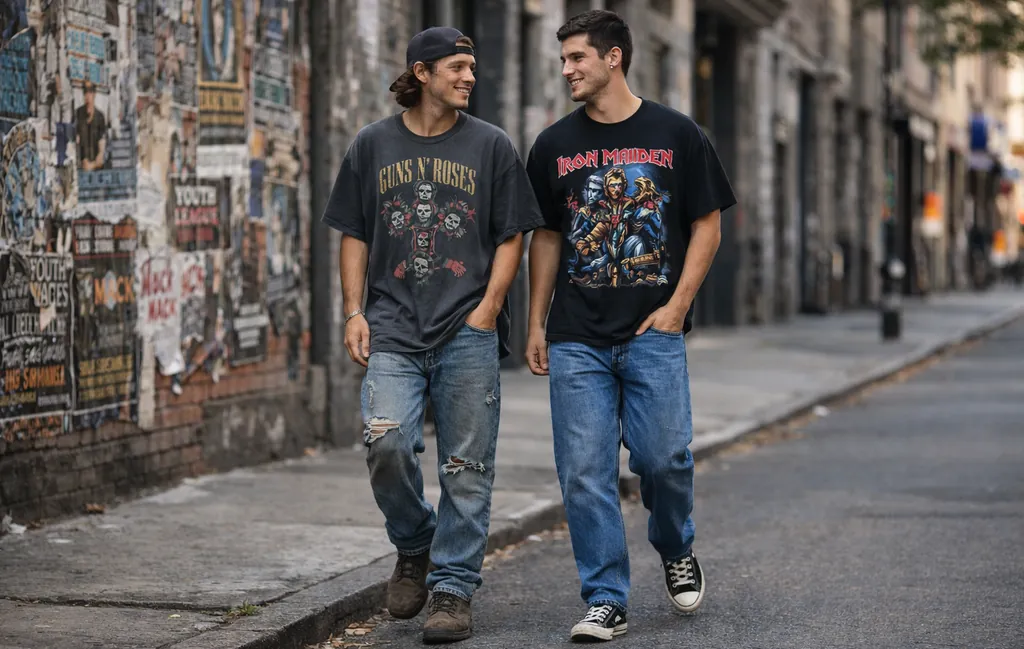
Beyond collectability and printing techniques, one of the most interesting aspects of vintage vs modern rock band T shirts is how they function in everyday style. These shirts started as concert souvenirs, but today they play a major role in streetwear and casual fashion.
Vintage band tees often carry a naturally relaxed aesthetic. Their faded cotton, softened structure, and worn graphics create an effortless retro look. Many fashion enthusiasts prefer pairing them with distressed denim, leather jackets, or boots to emphasize the nostalgic vibe.
Modern band shirts, on the other hand, offer a cleaner visual impact. Because the prints are sharper and the fabric maintains a structured feel, they work well in more polished casual outfits. Many people combine modern band tees with minimal sneakers, dark denim, or layered streetwear pieces.
In practice, both types of shirts can anchor strong outfits. The difference lies in how the graphic and fabric communicate personality. Vintage shirts lean toward authenticity and nostalgia, while modern designs deliver bold visuals and contemporary style.
How Vintage Band Tees Shape Streetwear
Vintage shirts became a cornerstone of streetwear during the early 2000s when musicians, skaters, and fashion creatives began mixing old tour merchandise with modern clothing silhouettes. This blending of eras helped create the “heritage streetwear” aesthetic that remains popular today.
The appeal comes from individuality. Since authentic vintage pieces are rare, wearing one can feel like owning a unique piece of music history. Even faded graphics or cracked prints add character rather than reducing value.
Collectors and stylists often search for shirts tied to iconic music eras, especially the late twentieth century. The visual style of those decades strongly influences how modern band shirts are designed today.
For a closer look at the design language that shaped vintage aesthetics, the breakdown in the 1990s rock band tees style guide explores how bold graphics and tour prints defined the decade.
Why Modern Band Shirts Fit Contemporary Fashion
Modern rock band shirts benefit from updated garment construction and predictable sizing. This consistency makes them easier to incorporate into everyday wardrobes. When someone buys a contemporary band shirt, they know how it will fit and how it will behave after washing.
Modern printing also allows extremely detailed artwork. Album covers, tour visuals, and artistic reinterpretations can appear with crisp lines and strong color depth. Because of this, modern band shirts often look closer to graphic design pieces than traditional merchandise.
For fans who want something stylish but wearable every week, modern shirts deliver a dependable option.
How to Tell if a Band Shirt Is Truly Vintage
One of the most common questions collectors ask is how to determine whether a shirt is genuinely vintage or simply a modern reprint. While some reproductions intentionally mimic retro graphics, authentic vintage pieces usually reveal their age through subtle details.
Here are a few indicators experienced collectors look for:
- Tag design – Older shirts often feature brand tags from past decades that are no longer produced.
- Print aging – Natural cracking or fading can appear on graphics after years of wear.
- Fabric softness – Cotton fibers soften significantly with repeated washing over time.
- Tour information – Many authentic shirts include tour dates printed on the back.
- Overall wear patterns – Slight fading or thinning may appear in high-friction areas.
However, it’s important to remember that not all aged shirts are valuable collectibles. Some simply show heavy wear rather than historical significance. Authenticity usually comes from a combination of the band, the tour, and the rarity of the design.
Which One Should You Buy?
Choosing between vintage and modern band shirts ultimately depends on what matters most to you as a fan.
If you enjoy collecting rare items tied to music history, vintage shirts provide a unique connection to past tours and album eras. Wearing one can feel like stepping into the cultural atmosphere of a particular moment in rock history.
But if your priority is everyday comfort, reliable sizing, and durable graphics, modern shirts offer a practical alternative. They maintain the visual energy of band merchandise while benefiting from improved textile production and printing technology.
Many fans actually build collections that include both. Vintage shirts become occasional statement pieces, while modern designs handle regular rotation in a wardrobe.
This balanced approach allows people to enjoy the cultural authenticity of vintage merchandise while still having dependable shirts they can wear frequently.
Where to Find Quality Rock Band Shirts
Whether someone prefers retro aesthetics or contemporary graphics, the best band shirts always reflect the same core idea: celebrating music culture through wearable art.
Fans who want modern interpretations of classic band imagery often explore curated collections focused specifically on music apparel. These collections bring together designs inspired by rock history, tour graphics, and album artwork while maintaining durable cotton construction and high-definition printing.
Exploring a dedicated music apparel catalog can also help fans discover new designs they might not encounter in traditional merchandise stores. Many collections focus exclusively on music culture, making it easier to find graphics tied to favorite artists and genres.
You can explore a wide range of music-inspired designs through the music T-shirt collection, which highlights rock band graphics alongside other music-themed apparel.
Frequently Asked Questions
Are vintage band shirts better quality than modern ones?
Not necessarily. Vintage band shirts often feel softer because the cotton has aged over time. However, modern shirts benefit from improved fabric consistency and advanced printing methods that help graphics remain vibrant and durable during everyday wear.
Why are vintage band tees so expensive?
Authentic vintage band tees can become valuable because they are tied to specific tours or historical moments in music culture. Limited production numbers and strong demand from collectors increase their resale value.
Do modern band shirts still use cotton?
Yes. Many modern band shirts are produced using durable cotton fabrics designed for comfort and longevity. Consistent fabric construction helps the shirt maintain its shape after repeated washing.
Can modern band shirts become vintage someday?
Yes. Today’s band shirts may eventually become vintage items decades from now. As time passes, shirts tied to important tours or music eras can gain historical and cultural significance.
Are vintage-style reprints considered vintage?
No. Shirts produced recently with retro graphics are usually considered vintage-inspired rather than authentic vintage pieces. True vintage shirts must have been produced during the original era of the band or tour.
Final Thoughts
The conversation around vintage vs modern rock band T shirts reflects something deeper than clothing trends. It highlights how music fans connect with culture, nostalgia, and personal style.
Vintage shirts represent moments in music history—tour stops, album releases, and decades that shaped rock culture. Modern band shirts, meanwhile, bring that same spirit into the present through updated fabrics, reliable construction, and vibrant graphic printing.
Whether someone chooses a rare vintage tee or a contemporary design, the real value lies in what the shirt represents: a shared love for music and the artists who create it.

Related Posts: