
No products in the cart.


Vintage Band Tees
What Makes a Band Tee Vintage? A Complete Breakdown
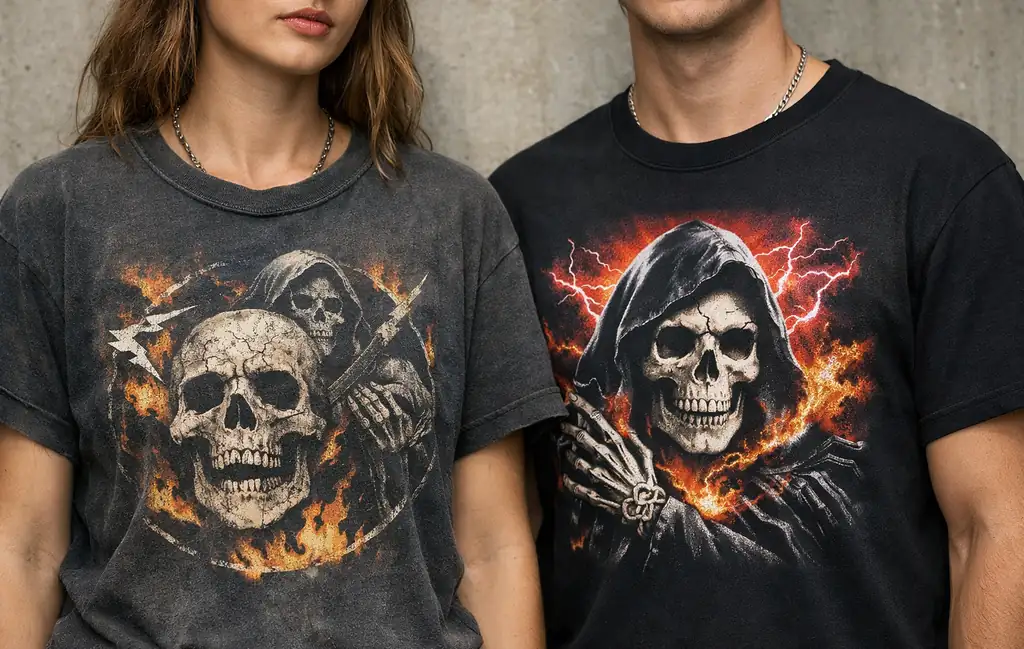
09
Mar
Mar
A band tee is considered vintage when it was originally produced during the artist’s active era—typically 20+ years ago—and features era-authentic construction, licensed tour graphics, and printing methods consistent with that time period. Age alone isn’t enough; authenticity, fabric build, and cultural relevance define true vintage status.
If you’ve ever asked what makes a band tee vintage, you’re not alone. The term gets thrown around constantly—on resale platforms, in streetwear culture, and even in modern retail marketing. But not every old shirt is vintage. And not every “vintage-inspired” tee qualifies as the real thing.
This guide breaks down the definition, construction details, cultural markers, and buyer psychology behind authentic vintage band shirts—so you can tell the difference with confidence.
What Does “Vintage” Actually Mean in Apparel?
In fashion, “vintage” typically refers to garments that are at least 20 years old and represent the aesthetic, production techniques, and cultural moment of their era. In music apparel, the definition tightens.
A true vintage band tee must meet three criteria:
- Era authenticity – Produced during the band’s active period.
- Original graphic execution – Not a later reprint.
- Period-correct construction – Fabric, stitching, and tags consistent with the time.
Here’s the contrarian truth: age alone doesn’t create value. Cultural relevance does. A random 2002 promotional shirt may technically be “old,” but it doesn’t carry the same weight as a 1994 tour tee from the height of the grunge era.
This is why shirts connected to bands like Nirvana or Metallica often command attention. They aren’t just old garments—they’re artifacts from cultural turning points in rock history.
How Old Does a Band Shirt Have to Be to Be Vintage?
One of the most common People Also Ask questions is: How old does a shirt have to be to be vintage?
Most industry consensus places the threshold at 20 years. However, in music culture, collectors often prioritize pieces from the 70s, 80s, and 90s—eras tied to explosive shifts in rock, metal, and alternative movements.
A 1991 tour shirt from the rise of alternative rock carries historical energy. A 2008 arena tour tee may not yet carry the same nostalgia weight. Time compounds meaning.
But there’s another layer: availability. Scarcity drives perceived vintage status. Limited tour runs, regional prints, and discontinued graphics increase cultural gravity.
That’s why collectors still chase shirts associated with the peak years of bands like Pink Floyd or The Rolling Stones—eras that defined sound and style simultaneously.
Original Production Era vs Modern Reprints
This is where buyer confusion happens.
Modern reprints replicate old graphics—but they’re not vintage. They’re licensed reproductions. And that’s not inherently negative. In fact, high-quality modern prints often outperform original shirts in durability and comfort.
The distinction is transparency.
A true vintage piece was printed and sold during the band’s original tour cycle. A modern reprint is manufactured later, sometimes decades later, using updated production methods.
For example, contemporary band tees often use high-definition print methods like DIGISOFT®, which produce a soft-hand feel and improved color retention with reduced cracking compared to older plastisol techniques. That difference alone can visually signal whether a shirt is original or reproduced.
Collectors value authenticity. Everyday wearers often value wearability. Knowing which category you fall into determines what matters most.
Fabric & Construction Markers of True Vintage Tees
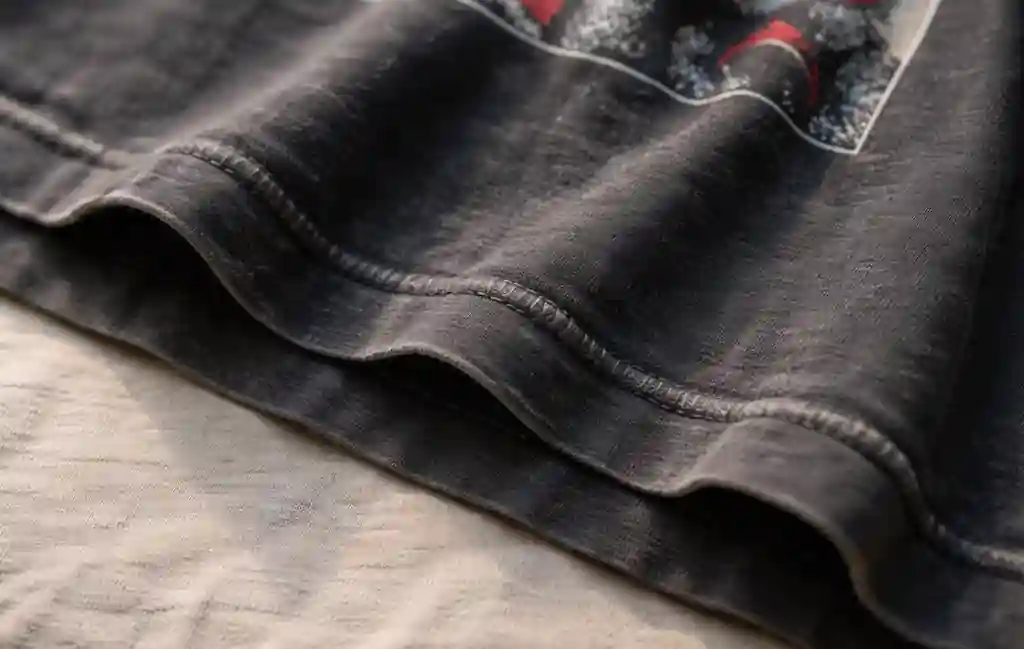
If you’re serious about identifying a vintage band tee, construction tells the truth faster than graphics do.
Key markers include:
- Single-stitch hems (common pre-2000)
- Thinner cotton due to decades of washing
- Slight collar stretching
- Faded dye irregularities
- Era-specific woven tags
Single stitching at the sleeves and hem is one of the most cited indicators. While not absolute proof, it’s a strong signal when combined with other era-consistent details.
Older shirts often used lighter cotton weights than many modern heavyweight builds. Over time, repeated washing softens fibers, giving authentic vintage tees that unmistakable drape collectors love.
But here’s a production insight: softness from age differs from softness engineered at manufacturing. Modern tees built on 5.3 oz heavyweight cotton retain structure while still offering comfort. That’s engineered softness—not worn-down fragility.
Authentic vintage is about time. Modern vintage-inspired is about controlled construction.
Tag & Label Identification
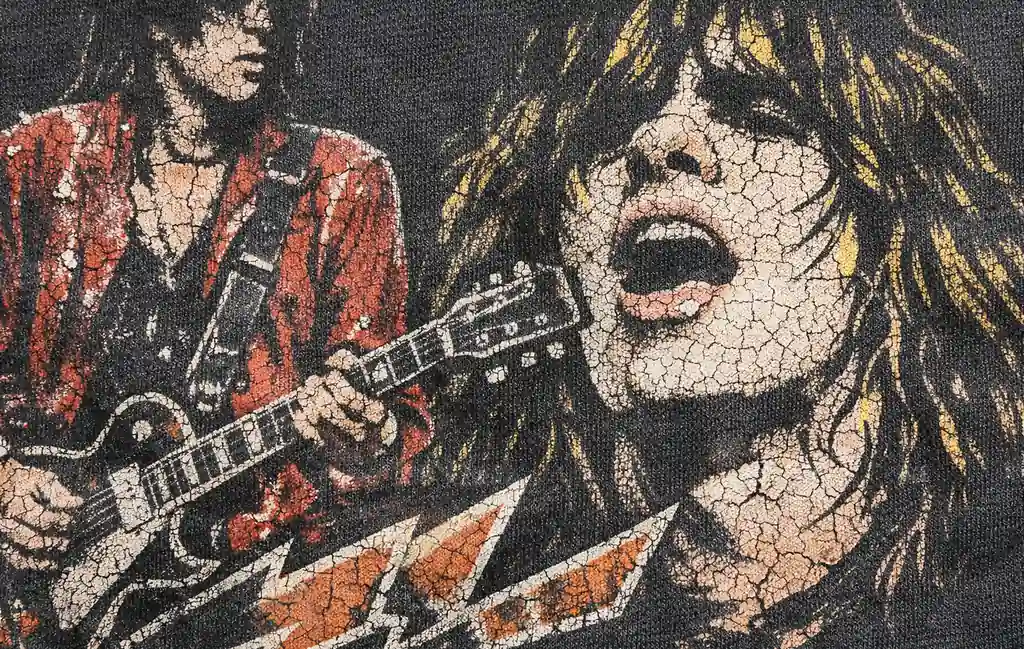
Another frequent question: How can you tell if a band shirt is original?
Tags often provide the fastest clue.
Vintage shirts commonly feature:
- Woven brand tags from now-defunct manufacturers
- Screen-printed neck labels with fading
- Union marks (in certain decades)
- Made-in-USA indicators from earlier production waves
Modern reprints typically use updated blank suppliers and printed neck labels for comfort. Clean typography and intact tag stitching usually signal newer production.
However, beware of overconfidence. Tags can be removed or replaced. Authentication requires multiple signals—fabric, stitching, print aging, and licensing details working together.
Print Style & Graphic Aging
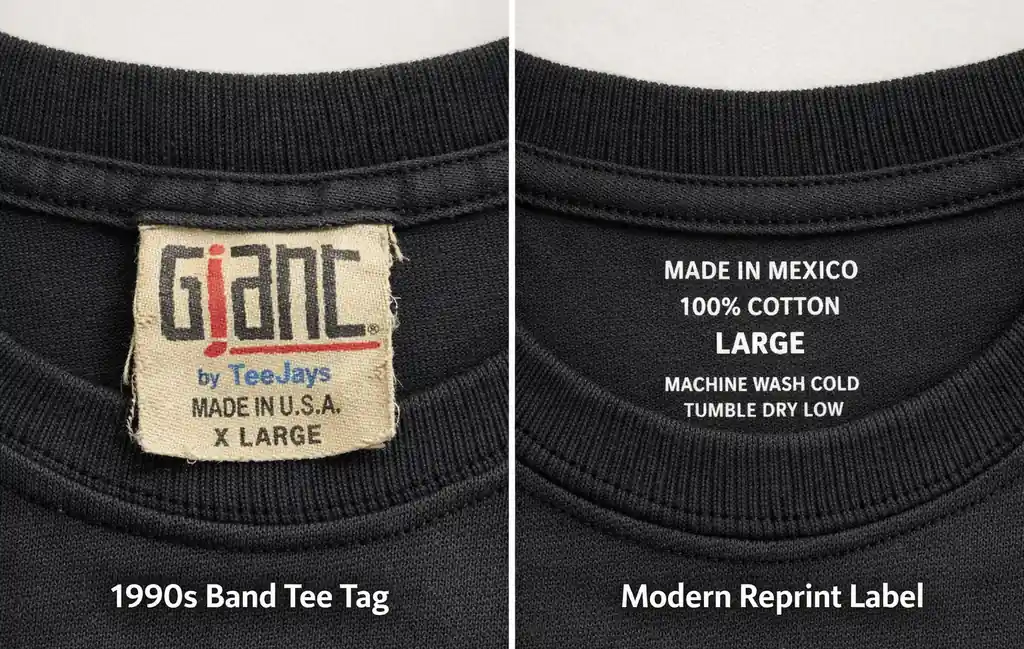
Print texture might be the most romanticized element of vintage band culture.
Natural cracking occurs when older plastisol ink dries and fractures over years of wear. This cracking often follows the fabric’s stretch lines, creating an organic breakdown pattern.
But here’s the nuance: intentional “distressed printing” exists. Some modern designs replicate cracked ink for aesthetic appeal.
The difference?
Authentic aging appears irregular and layered. Artificial distressing often looks evenly distributed or surface-level.
Collectors often pay premiums for shirts tied to iconic eras—like early 90s alternative tours or late 80s metal circuits—because the print carries not just texture, but historical proximity.
Why 80s and 90s Band Tees Became Cultural Icons
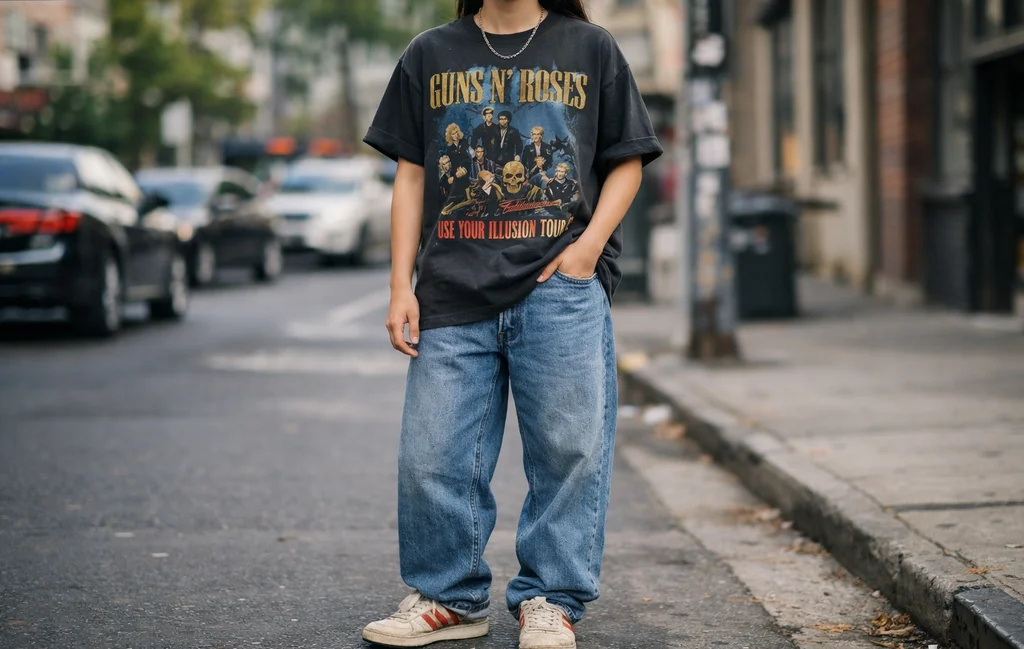
The explosion of vintage band culture didn’t happen randomly.
The 1980s and 1990s represented peak graphic experimentation in music merchandise. Tour shirts weren’t minimalist—they were loud, oversized, unapologetic. They mirrored the scale of live performance culture.
When bands like Guns N’ Roses dominated stadium tours, their merchandise became wearable proof of attendance. Wearing the shirt signaled participation.
Fast forward two decades, and nostalgia converted those shirts into artifacts. Scarcity plus cultural memory created value.
That’s also why modern vintage band tees collections focus heavily on era-authentic graphics. They tap into that visual language—bold type, tour backprints, high-contrast imagery—while delivering updated durability.
It’s not about pretending to be 1992. It’s about honoring 1992 intelligently.
By this point, the distinction should be clear: authenticity is historical. Vintage-inspired is intentional design. Both have a place—if you understand what you’re buying.
Up next: we’ll break down resale value, common buying mistakes, vintage vs retro myths, and how to confidently choose the right type of band tee for your wardrobe.
Vintage vs Retro vs Vintage-Inspired: Stop Using Them Interchangeably
One of the biggest misconceptions in music apparel is assuming these three terms mean the same thing. They don’t.
Vintage refers to an original garment produced during the era it represents.
Retro refers to modern clothing designed to mimic the aesthetic of a past era.
Vintage-inspired sits in the middle—new production, era-aware design, but transparent about being contemporary.
Here’s the buyer psychology layer: many people searching what makes a band tee vintage are not necessarily collectors. They’re chasing a feeling—authenticity, rebellion, nostalgia, identity.
A real 1994 tour shirt carries history. A modern reproduction carries design clarity and structural reliability. The right choice depends on what you value most:
- Historical artifact
- Wearable durability
- Price accessibility
- Cultural symbolism
Understanding the distinction protects you from overpaying—and from underestimating modern craftsmanship.
Are Vintage Band Tees Worth Money?
Another frequent PAA question: Are vintage band tees worth money?
Yes—but selectively.
Value depends on:
- Band cultural impact
- Era significance
- Tour-specific graphics
- Condition
- Size availability
- Licensing authenticity
Shirts tied to defining cultural moments—early alternative rock, major metal world tours, genre-shifting albums—carry higher resale ceilings.
But condition matters. Excessive fabric thinning, neckline distortion, and severe graphic loss reduce wearability—even if they increase “patina appeal.”
There’s also a myth that all 90s shirts are expensive. They’re not. Market awareness matters. Oversaturation lowers value. Cultural milestone pieces elevate it.
Collectors chase scarcity. Casual buyers chase style. Confusing the two leads to regret.
How to Buy a Vintage Band Tee Without Getting Burned
Let’s move from theory to protection.
If you’re buying resale, use this checklist:
- Inspect stitching (single stitch is common pre-2000)
- Check tag brand and typography consistency
- Look for official licensing marks
- Examine cracking patterns for authenticity
- Confirm tour dates match the band’s history
One overlooked detail: back prints. Authentic tour shirts usually list real city stops. Cross-checking those dates can expose fake reproductions.
Also ask yourself: Am I buying for investment or for daily wear?
If you want a piece to rotate weekly, extremely fragile fabric may not be practical. True vintage can be delicate after decades of washing.
This is where modern music t-shirts collections become relevant. They allow you to embrace heritage aesthetics while maintaining structural integrity.
Authenticity is powerful. So is longevity.
Production Reality: Why Modern Vintage-Style Tees Exist
Here’s the perspective rarely discussed in resale blogs: original production methods weren’t optimized for 30-year survival.
Older plastisol prints crack. Cotton fibers weaken. Necklines stretch. That’s natural aging—not premium engineering.
Modern vintage-style tees, by contrast, benefit from refined production. For example:
- Heavyweight 5.3 oz cotton builds maintain structure
- Taped neck and shoulders improve durability
- High-definition printing methods reduce premature cracking
- Color retention remains stronger through repeated washes
This doesn’t diminish real vintage. It clarifies the tradeoff.
True vintage is history. Modern vintage-inspired is controlled quality.
If your goal is daily wear with cultural credibility, the latter often makes more sense.
Why 90s Graphics Still Dominate Vintage Demand
When people ask why 90s band shirts are expensive, they’re really asking about cultural compression.
The 90s represented:
- Mainstream alternative crossover
- Explosive tour merchandising
- Large-format back prints
- Bold typography experimentation
That era also aligned with emerging streetwear culture. Oversized fits and graphic-forward design became style staples—not just concert memorabilia.
As fashion cycles repeat every 20–30 years, demand resurfaces. Scarcity collides with nostalgia.
But here’s the contrarian insight: the aesthetic matters more than the timestamp for most buyers. Visual impact drives modern demand just as much as age.
Decision Clarity: Which Type of Band Tee Should You Choose?
If you’re still evaluating, use this framework:
- Choose authentic vintage if you value historical ownership and collector energy.
- Choose modern vintage-inspired if you prioritize fit consistency and durability.
- Choose contemporary music graphics if you want current-era relevance.
There’s no hierarchy—only alignment.
For most 18–35 music culture enthusiasts, wearable longevity combined with era-aware design provides the strongest balance.
That’s why curated selections inside vintage-inspired band tees collections resonate. They preserve graphic language while eliminating structural fragility.
Clarity removes impulse regret.
Frequently Asked Questions
How can you tell if a band shirt is truly vintage?
Look for era-consistent stitching, authentic woven tags, natural ink cracking, and accurate tour dates. No single detail proves authenticity alone. Real vintage status comes from multiple aligned indicators working together.
What is the difference between vintage and reprint band shirts?
Vintage shirts were produced during the band’s original era. Reprints are manufactured later, often using updated materials and printing methods. Reprints may look similar but lack historical production timing.
Why are 90s band tees so expensive?
They combine scarcity, cultural nostalgia, and bold graphic identity. Many were printed in limited tour runs, and surviving examples in good condition are increasingly rare.
Do vintage band tees fit differently?
Yes. Older shirts often have narrower cuts and softer drape due to fiber aging. Modern unisex fits tend to offer more consistent sizing and structural stability.
Is cracked print always a sign of authenticity?
No. Natural cracking occurs over time, but modern designs sometimes replicate the look. Texture depth, irregularity, and ink layering help differentiate authentic aging from intentional distressing.
The Bottom Line: Authenticity vs Intentional Craft
Understanding what makes a band tee vintage isn’t about gatekeeping—it’s about awareness.
True vintage pieces carry time inside the fabric. They represent specific tours, album cycles, and cultural moments.
Modern vintage-inspired tees carry intentional craft. They preserve graphic identity while benefiting from contemporary production improvements.
If your goal is daily wear with cultural resonance, explore thoughtfully curated music apparel that respects heritage while delivering structure and durability.
Start with the full Music T-Shirts collection and navigate toward the style that fits your priorities—whether that’s era authenticity or modern precision.
Because in the end, the best band tee isn’t just old.
It’s meaningful.
End of Article.
