No products in the cart.
Save 20% on orders over $100 with code CT20

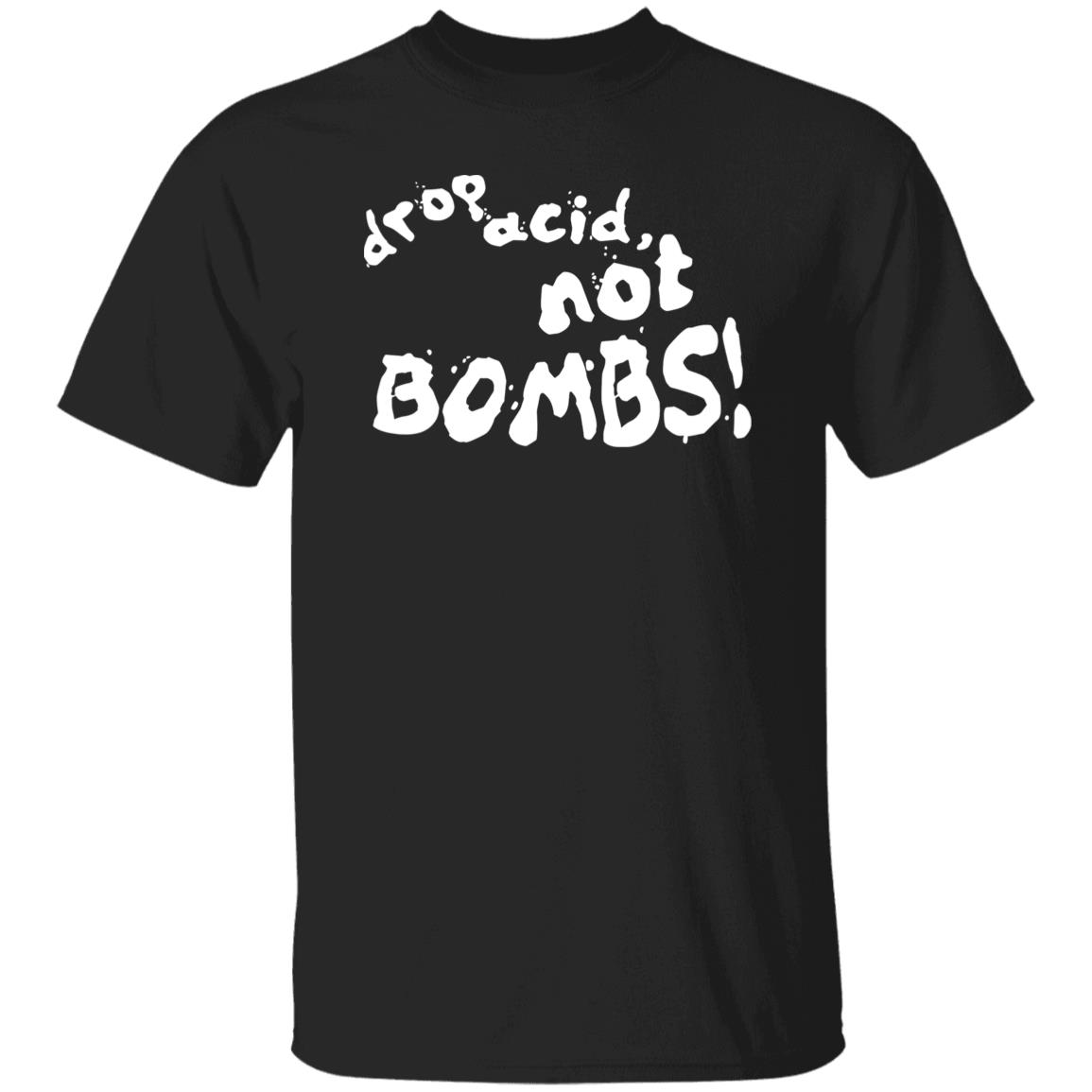
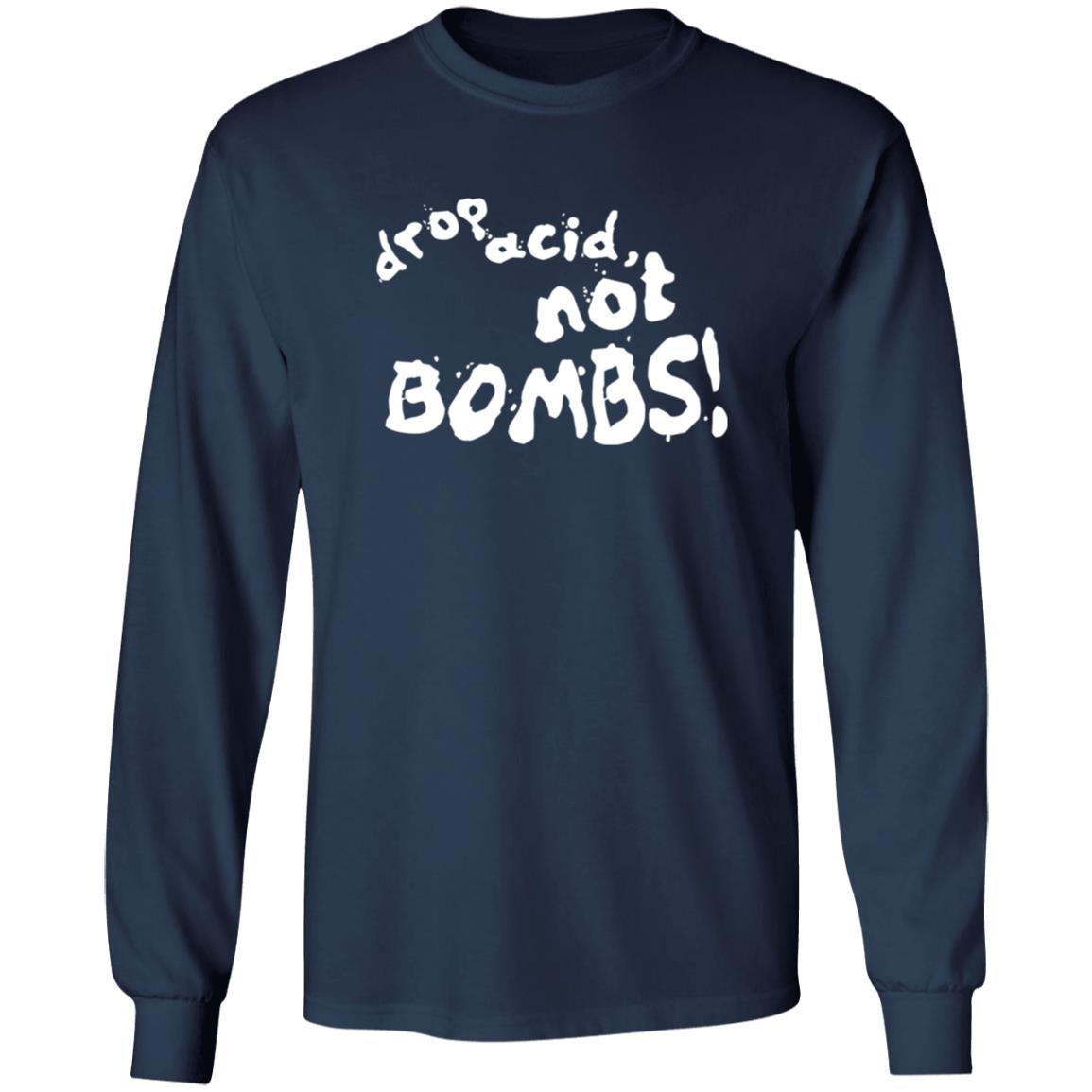



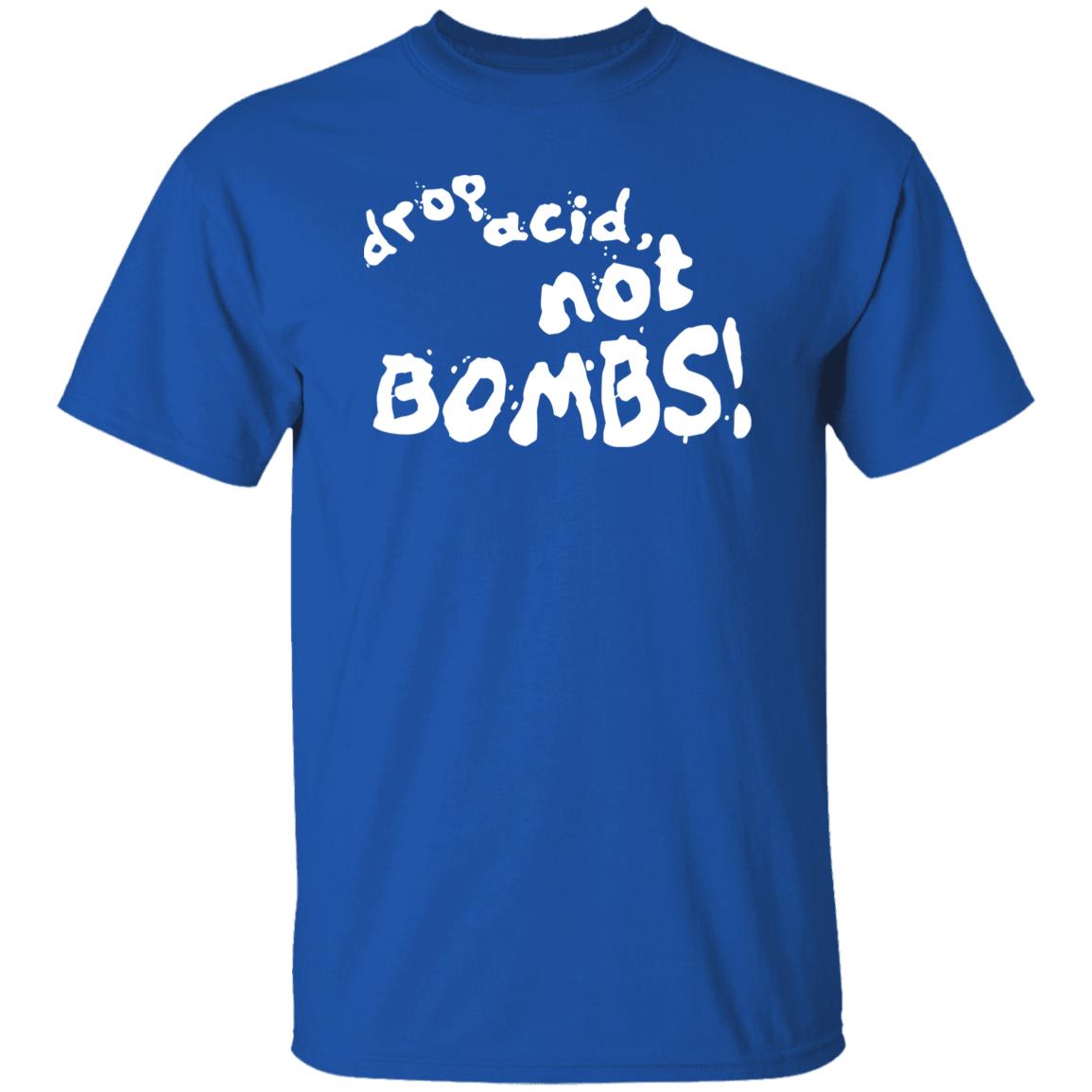


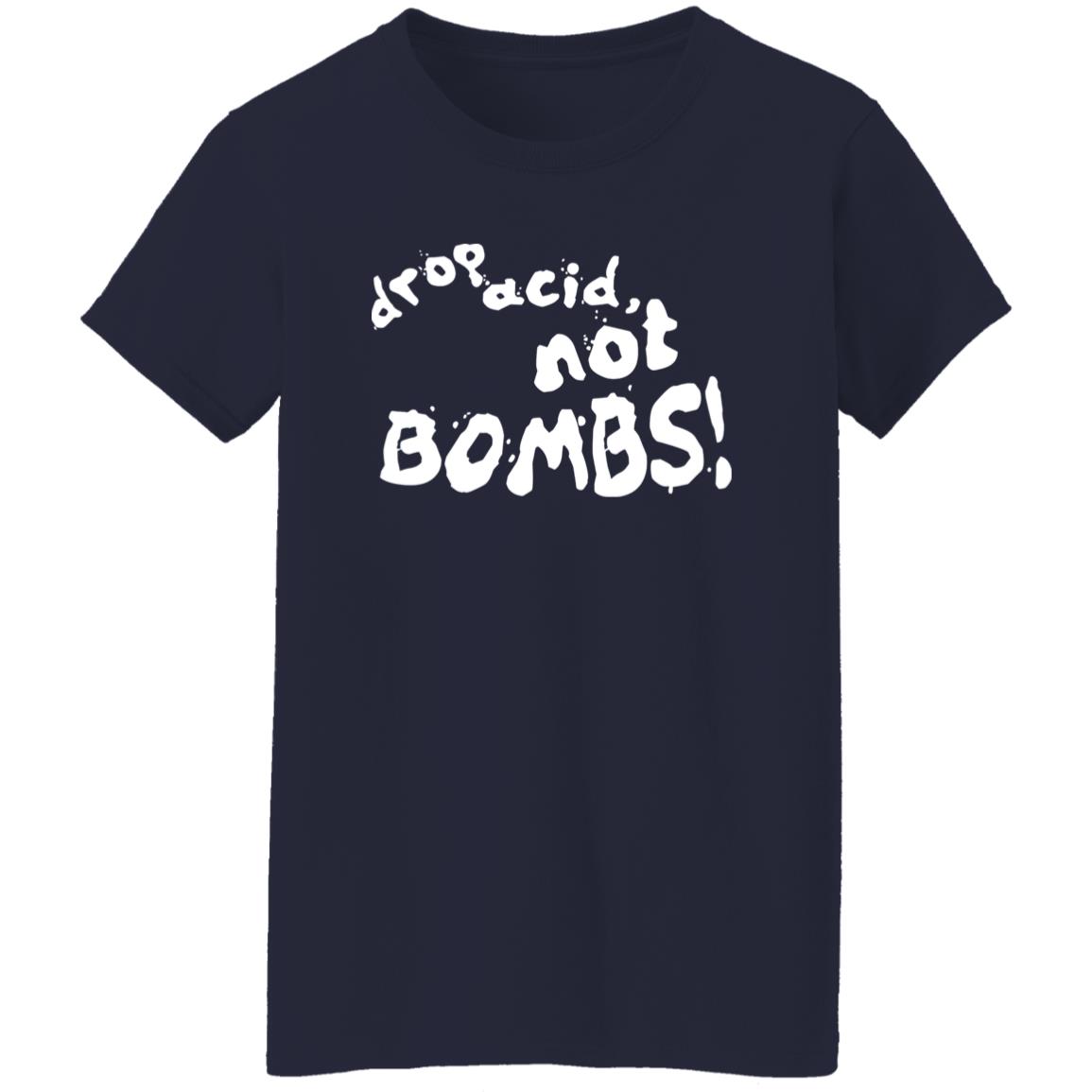














Price range: $21.90 through $44.99
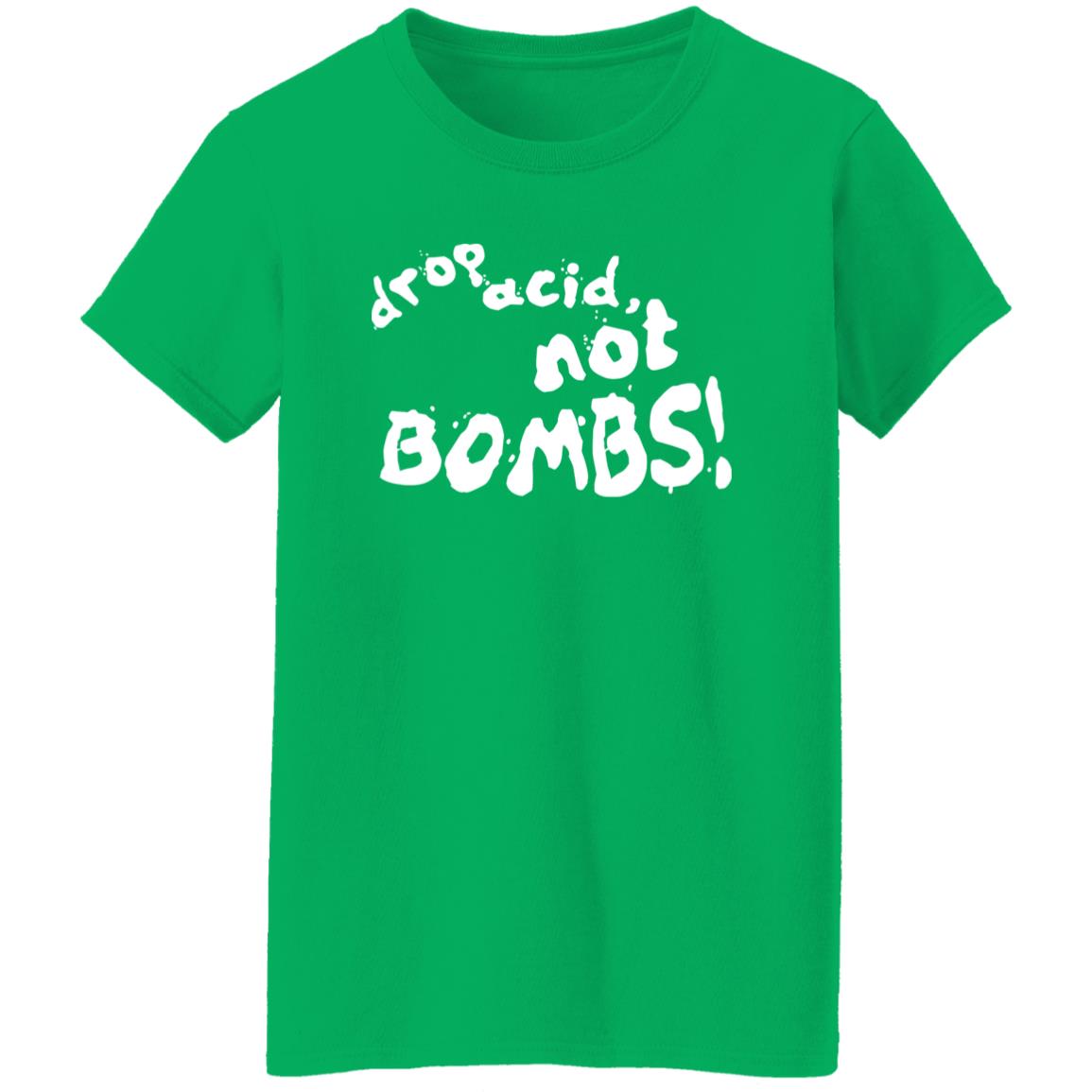
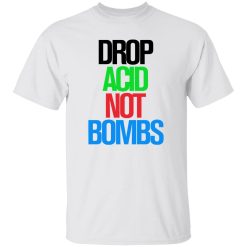
Few slogans capture the spirit of psychedelic counterculture as sharply as “Drop Acid Not Bombs.” Emerging from the protest-heavy atmosphere of the late 1960s, the phrase turned music festivals, underground art, and anti-war demonstrations into a shared cultural language. Today, the Drop Acid Not Bombs V4 Shirt carries that same visual rebellion forward—bridging vintage psychedelic aesthetics with modern music lifestyle fashion.
The design isn’t just a graphic. It’s a signal that connects the rebellious creativity of rock-era youth culture with today’s generation of music fans and collectors. For those exploring explore music lifestyle shirts, this type of statement piece represents more than style—it reflects a lineage of artistic protest and sonic freedom.
The phrase first circulated during the peak of the psychedelic era, when music scenes and anti-war activism often overlapped. Artists, musicians, and festival crowds used visual slogans like this as symbolic resistance against political tension and militarization. Psychedelic posters, album art, and handmade protest banners shared the same language—bright colors, surreal typography, and messages calling for consciousness rather than conflict.
Within music culture, these visuals weren’t isolated political statements. They were inseparable from the sound of the time. The swirl of experimental guitar riffs, extended jams, and psychedelic studio production shaped an entire visual identity that spilled from concert halls into everyday fashion. Wearing a shirt with this slogan was not about provocation for its own sake. It was about signaling alignment with a culture that valued creativity, peace, and exploration.
Decades later, the message still resonates. Not because it belongs to a single era, but because the underlying idea—choosing artistic awareness over destruction—remains culturally recognizable.
Graphic protest art from the psychedelic period relied heavily on striking visual symbolism. Designs rarely used plain typography or neutral colors. Instead, they embraced hypnotic lettering, distorted forms, and vibrant contrasts meant to mimic the altered perception associated with psychedelic experiences.
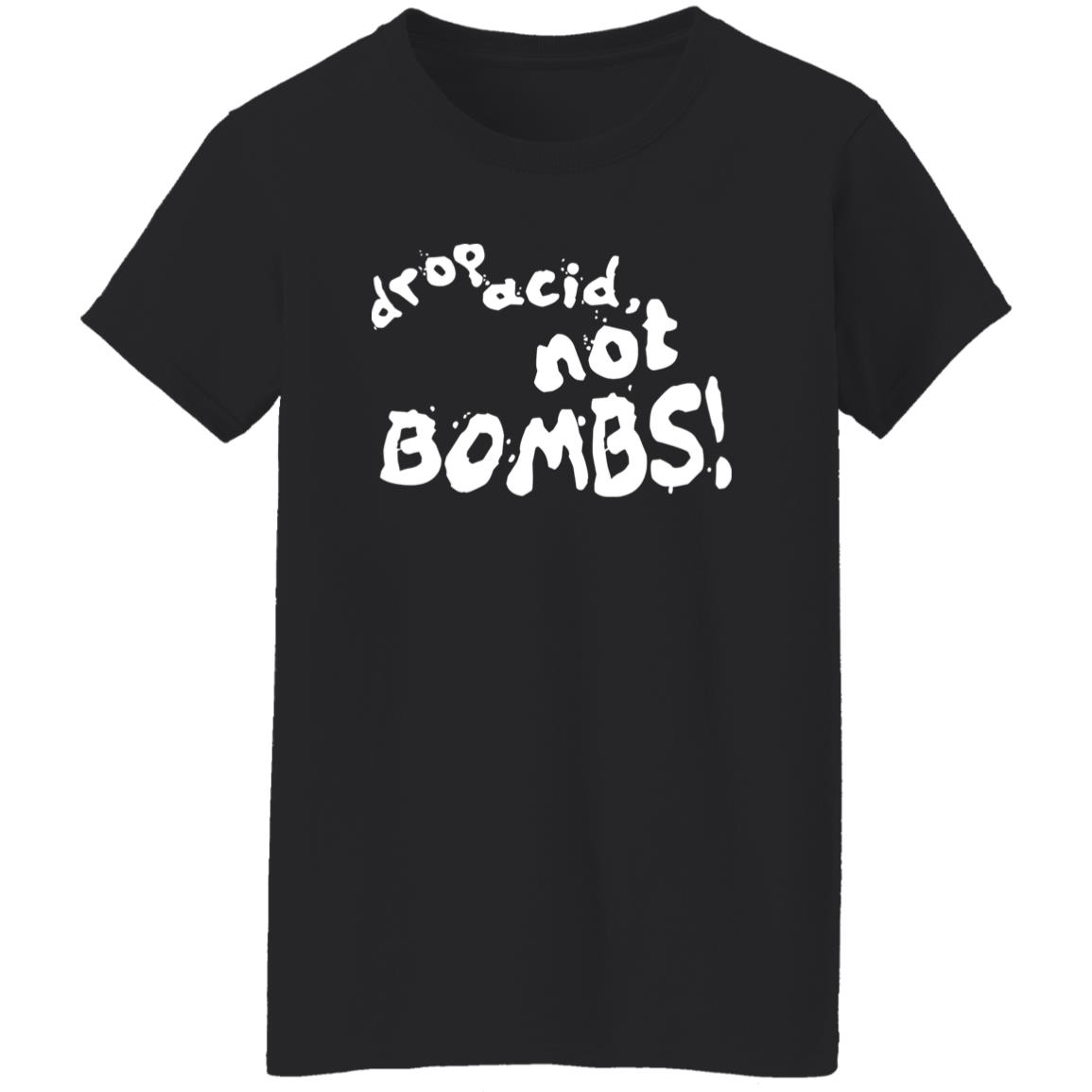
The Drop Acid Not Bombs V4 Shirt reflects this heritage through its print composition. The graphic carries a bold visual presence that stands out without needing aggressive branding. The print feels intentionally expressive—almost poster-like—echoing the handmade protest graphics once seen outside concert venues, record stores, and college campuses.
From a distance, the design functions like a piece of wearable art. Up close, the layered textures and graphic lines reveal the influence of classic counterculture illustration styles. This balance between visibility and artistic nuance is part of what keeps psychedelic iconography relevant in contemporary streetwear.
Counterculture aesthetics rarely disappear—they evolve. What once belonged exclusively to underground music scenes eventually moves into broader style culture, especially when the symbolism remains powerful.
The transformation of protest graphics into everyday fashion reflects this evolution. Instead of being confined to demonstrations or festival fields, these visuals now appear in modern streetwear collections, vintage-inspired apparel, and music-focused lifestyle brands.
The Drop Acid Not Bombs V4 Shirt fits squarely within that transition. It maintains the rebellious energy of its origins while adapting to the relaxed silhouettes and everyday comfort expected from modern graphic tees. The result is something that feels historically informed yet easy to integrate into contemporary wardrobes.
This blend of past and present matters for music fans. Wearing imagery tied to cultural movements creates a visual conversation—one that connects vintage ideology with modern expression.
Music culture has always relied on symbols. Band logos, album artwork, protest slogans, and underground artwork form a visual language that communicates identity without explanation.
Statement shirts like this work because they operate on multiple levels:
For collectors and music enthusiasts, graphic shirts also carry an archival quality. Each design becomes a small cultural artifact, representing the aesthetics and ideals of a specific artistic movement.
Despite its historical roots, the Drop Acid Not Bombs V4 Shirt works easily within modern casual styling. The design carries enough visual energy to anchor an outfit, yet it remains flexible enough to pair with everyday wardrobe staples.
In relaxed streetwear contexts, the shirt naturally complements classic denim, worn-in jackets, and vintage sneakers. The graphic becomes the focal point while the rest of the outfit stays minimal. This approach mirrors the effortless style often associated with record store culture and alternative music scenes.
At concerts or festivals, statement tees like this function almost like scene markers. They show an appreciation for music history and underground aesthetics while still feeling contemporary. The visual language of psychedelic protest art translates easily into environments where music, art, and fashion intersect.
Even outside music-focused settings, the shirt maintains a certain authenticity. It doesn’t rely on temporary trends. Instead, it draws from a visual tradition that has influenced graphic design, poster art, and streetwear for decades.
The reason slogans like “Drop Acid Not Bombs” continue appearing in fashion isn’t nostalgia alone. It’s adaptability. Counterculture messages survive because each generation interprets them slightly differently.
For some, the phrase represents a historical protest movement tied to psychedelic rock culture. For others, it symbolizes broader ideas about creativity, individuality, and resistance to rigid systems. In either interpretation, the message still encourages questioning, artistic exploration, and cultural curiosity.
The Drop Acid Not Bombs V4 Shirt captures that evolving meaning. It honors the visual language of classic protest art while giving modern music fans a way to carry that cultural energy into everyday life. What began as a slogan shouted across festival fields and campus protests now lives on as wearable art—still rebellious, still expressive, and still unmistakably tied to the spirit of music culture.
| Product | Drop Acid Not Bombs V4 Shirt |
|---|---|
| SKU | cc-1049-9971-104998410-1716694035272 |
| Fabric Weight | Midweight (5.3 oz) – Heavyweight (6.0 oz Long Sleeve) |
| Material Composition | Solid Colors: 100% Cotton Ash Grey: 99% Cotton / 1% Polyester Sport Grey: 90% Cotton / 10% Polyester Dark Heather: 50% Cotton / 50% Polyester |
| Fit | Classic Unisex Fit (Ladies: Slightly Tapered Missy Fit) |
| Construction | Double-needle stitching Taped neck & shoulders Preshrunk jersey knit Tearaway label |
| Hoodie Material (G185) | 8.0 oz – 50% Cotton / 50% Polyester |
| Available Sizes | S – 5XL (6XL select colors only) |
| Origin | Made with sustainably and fairly grown USA cotton; Printed in USA |
| Print Method | DIGISOFT® Direct-to-Garment (DTG) |
| Brand | Capital T Shirt |
| Fast & Reliable Shipping | All orders are professionally printed and shipped from the USA. |
|---|---|
| Processing Time | Printed on demand within 1–3 business days. |
| Shipping Time | USA: 4–7 business days International: 7–15 business days |
| Shipping Costs | USA Standard: $5.99 International Standard: $9.99 |
| Secure Checkout | Safe & encrypted payment processing. Your information is protected at all times. |
| Returns & Exchanges | We offer a 30-day return policy. View Refunds & Returns Policy |
| Customer Guarantee | We stand behind the quality of every item we print. |








Reviews
There are no reviews yet.