No products in the cart.
Save 20% on orders over $100 with code CT20















Price range: $21.90 through $44.99
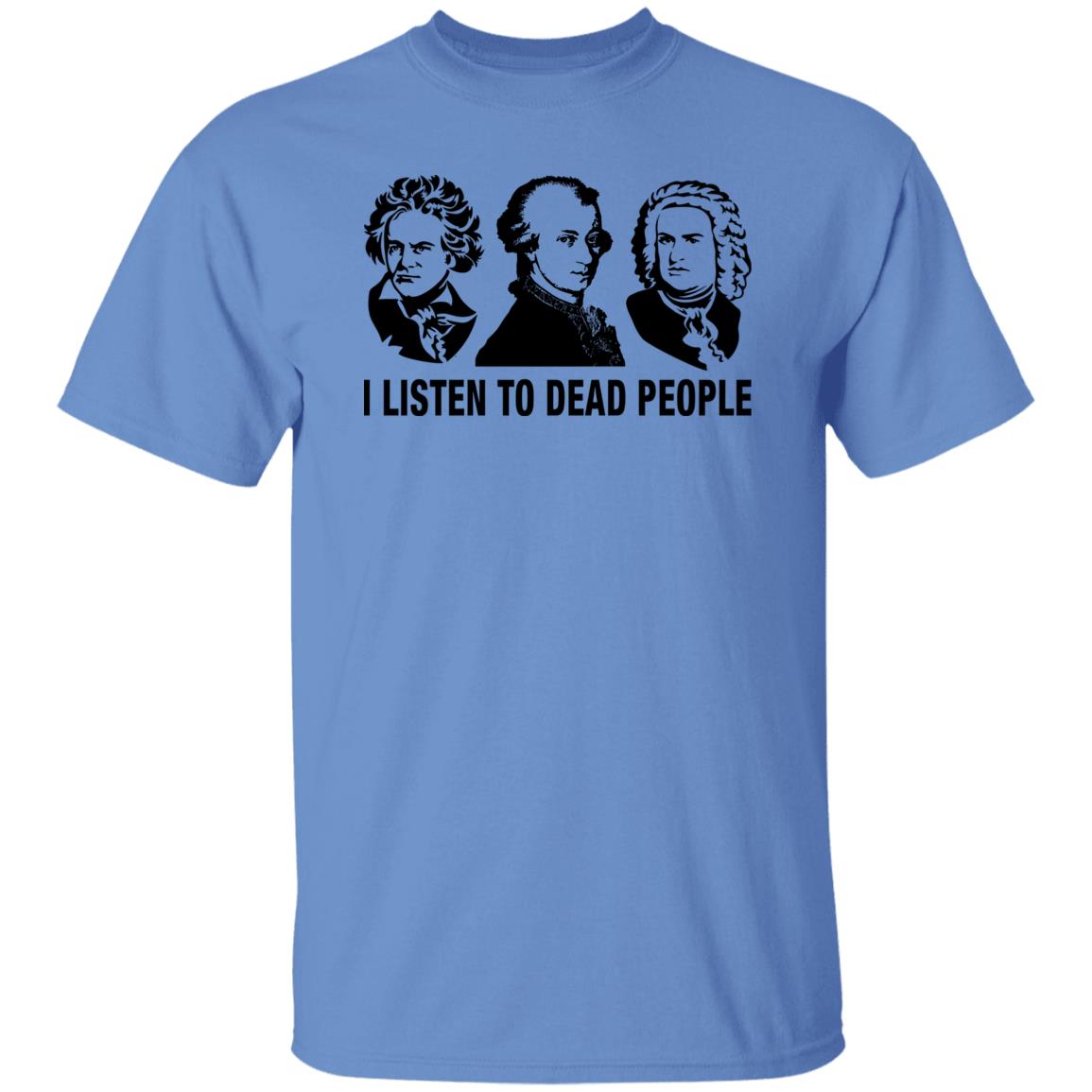
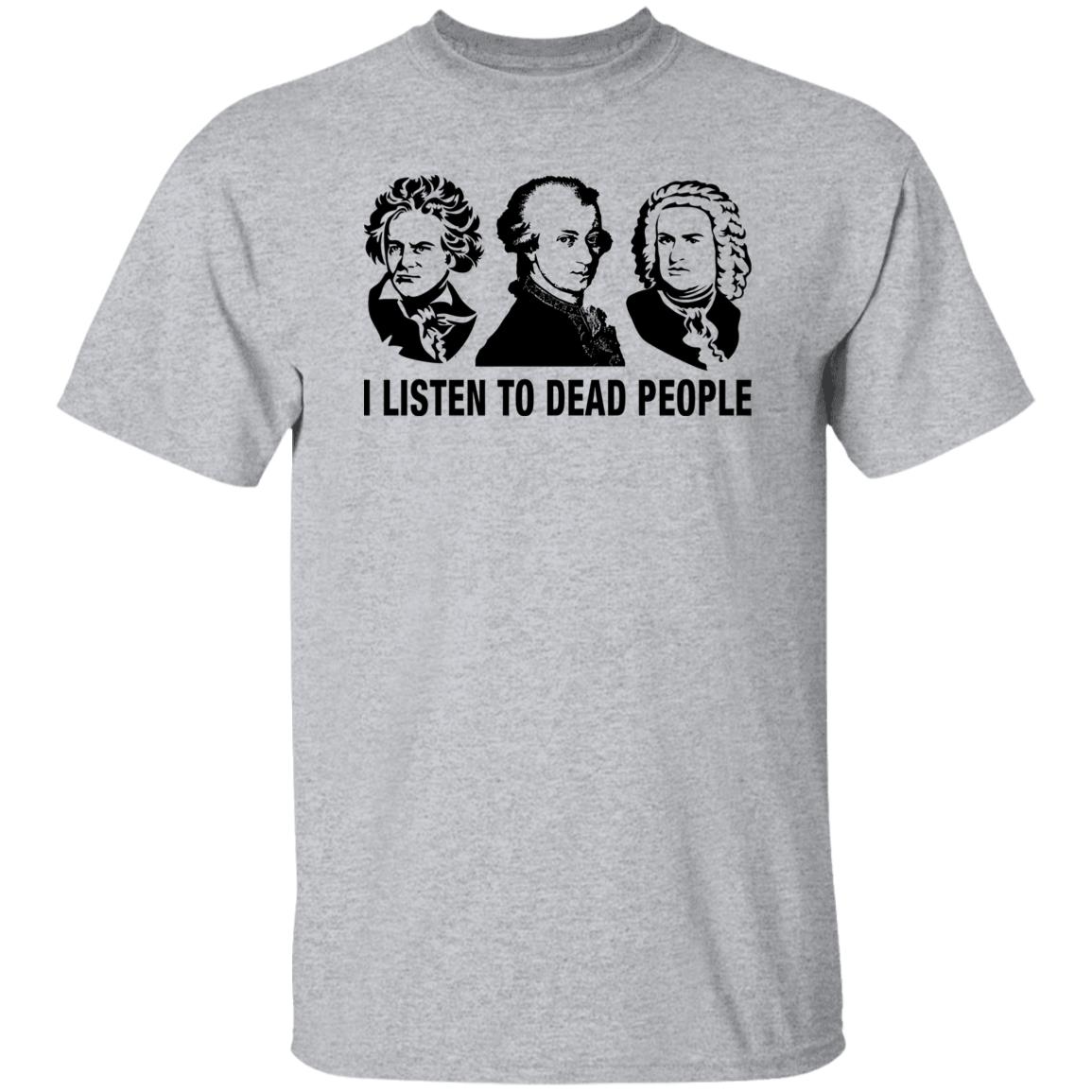
The I Listen to Dead People Shirt stands out immediately—not just for its phrase, but for how that phrase holds up over time. In a space where graphic tees often fade into novelty, this one maintains clarity, contrast, and presence through repeated wear. It’s built for people who don’t just wear music—they live in its history.
That difference becomes clear the moment you put it into rotation alongside other classic band logo shirts. The print doesn’t collapse into the fabric or lose its edge after a few cycles. Instead, it develops a lived-in character without sacrificing legibility—something essential for a design that relies on sharp, ironic contrast.
This shirt isn’t just about a clever line—it’s about making sure that line stays intact through real use. The print application is designed to resist breakdown from friction, repeated washing, and natural fabric movement. That means the typography retains its shape, spacing, and visual weight even as the shirt softens over time.
Many graphic tees lose their impact because the ink begins to crack unevenly or fade inconsistently. Here, the aging process is controlled and gradual. Instead of sharp degradation, the surface develops a subtle patina—more like a vintage record sleeve than a worn-out print.
When a shirt carries a statement like this, the message is everything. If the print weakens, the entire piece loses its identity. With this design, the clarity holds long enough to remain intentional—never accidental, never washed out into background noise.
There’s a noticeable difference between a print that sits stiffly on fabric and one that integrates with it. This shirt leans into the latter. The ink settles into the fibers in a way that moves with the material instead of resisting it. As the shirt breaks in, the print adapts rather than cracks aggressively.
That integration creates a more natural wear experience. You don’t feel like you’re wearing a layer on top of the fabric—you feel like the design belongs to it. Over time, this results in a smoother surface and a more cohesive look, especially when paired with other worn-in pieces.
It’s the kind of detail you don’t notice immediately but appreciate after multiple wears. The shirt becomes easier to throw on, easier to style, and more reliable in how it presents itself.
Repeated washing is where most graphic tees start to fail. Edges blur, contrast drops, and the original design intent gets lost. This piece is structured to avoid that kind of breakdown.
Instead of sharp, unpredictable fading, the print maintains its tonal balance. The dark areas stay grounded, and the lighter elements remain visible. Even after extended use, the phrase stays readable without needing to “relearn” the design.
This level of consistency is what separates a one-season novelty shirt from something you keep reaching for.
There’s a difference between a shirt you wear once in a while and one that becomes part of your weekly rotation. This one is clearly built for the latter. It doesn’t rely on staying pristine—it’s designed to evolve without losing its core identity.
That makes it easier to pair with everyday pieces. Denim, layered flannels, worn jackets—it adapts without demanding attention every time. The message is still there, but it feels integrated into your overall look rather than sitting on top of it.
That adaptability comes from how the print ages. It doesn’t fight the rest of your wardrobe—it aligns with it.
Not every graphic tee improves with time. Some simply degrade. This one shifts. The edges soften slightly, the ink settles deeper, and the overall look becomes more cohesive. It moves closer to that vintage feel people try to replicate—but does it naturally.
There’s also a subtle confidence in knowing the design won’t disappear after a handful of washes. You can rely on it to hold its shape visually, even as the fabric relaxes and becomes more comfortable.
That balance—between durability and natural aging—is what defines its long-term value.
In the end, the I Listen to Dead People Shirt isn’t just about the statement it makes on day one. It’s about how that statement holds up, evolves, and continues to resonate every time you wear it. That’s what turns a graphic tee into something worth keeping.
| Product | I Listen to Dead People Shirt – Vintage Music Culture Statement Tee |
|---|---|
| SKU | cc-1049-9974-105155251-1718611337857 |
| Fabric Weight | Midweight (5.3 oz) – Heavyweight (6.0 oz Long Sleeve) |
| Material Composition | Solid Colors: 100% Cotton Ash Grey: 99% Cotton / 1% Polyester Sport Grey: 90% Cotton / 10% Polyester Dark Heather: 50% Cotton / 50% Polyester |
| Fit | Classic Unisex Fit (Ladies: Slightly Tapered Missy Fit) |
| Construction | Double-needle stitching Taped neck & shoulders Preshrunk jersey knit Tearaway label |
| Hoodie Material (G185) | 8.0 oz – 50% Cotton / 50% Polyester |
| Available Sizes | S – 5XL (6XL select colors only) |
| Origin | Made with sustainably and fairly grown USA cotton; Printed in USA |
| Print Method | DIGISOFT® Direct-to-Garment (DTG) |
| Brand | Capital T Shirt |
| Fast & Reliable Shipping | All orders are professionally printed and shipped from the USA. |
|---|---|
| Processing Time | Printed on demand within 1–3 business days. |
| Shipping Time | USA: 4–7 business days International: 7–15 business days |
| Shipping Costs | USA Standard: $5.99 International Standard: $9.99 |
| Secure Checkout | Safe & encrypted payment processing. Your information is protected at all times. |
| Returns & Exchanges | We offer a 30-day return policy. View Refunds & Returns Policy |
| Customer Guarantee | We stand behind the quality of every item we print. |




Reviews
There are no reviews yet.